


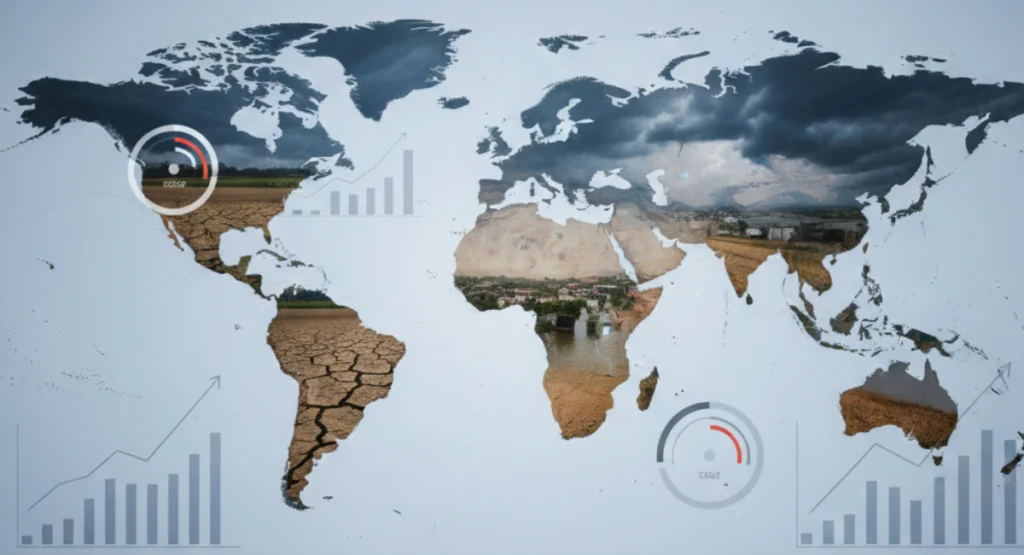
Global climate reports show a widening $1.3 trillion adaptation finance gap as COP30 ends without a concrete funding roadmap.
A new warning from the United Nations shows a harsh truth: the world is far behind on climate adaptation finance, and the gap has now reached $1.3 trillion.
COP30 was expected to deliver a strong roadmap — but the final outcome left developing nations disappointed.
When I reviewed reports from the UN and multiple climate research groups, one thing became clear: climate impacts are rising faster than the financial help meant to prepare countries for them.
What Triggered the Adaptation Finance Alarm?
UN Data Shows the Gap Has Hit $1.3 Trillion
According to the UN Environment Programme (UNEP), latest Adaptation Gap Report :
- Developing nations need $215–$387 billion every year
- But actual support is less than 25% of what is required
- The total adaptation finance gap is now $1.3 trillion
Africa has been hit the hardest. Experts say wealthy nations owe African countries double the climate adaptation support promised.
UNEP highlights a major red flag: adaptation costs for developing countries could surge to $310–365 billion annually by 2035.
“Adaptation funding is not a charity — it is climate justice.”
COP30 Outcome – What Went Wrong?
No Concrete Roadmap Despite Urgent Demands
Delegates hoped COP30 would announce :
- A clear finance roadmap
- Fixed annual targets
- Transparent accountability
But the COP30 outcome — as explained in the Carbon Brief COP30 summary — had no numbers, no timelines, and no binding plan.
Countries described the outcome as “weak,” “incomplete,” and “far from reality.”
Failure to Agree on Fossil Fuel Phase-Out
The disagreement over fossil fuels also slowed progress.
Many experts believe:
- No phase-out = more climate disasters
- More disasters = more adaptation needs
- But adaptation finance is already far behind
This loop makes the crisis even deeper.
Voices From the Global South
India Calls for a “$1.3 Trillion Climate Finance Roadmap”
India strongly pushed the world to deliver a real financial plan.
Their message was simple:
Climate promises must turn into climate payments.
While reading India’s official statement, I could feel the urgency. India stressed :
- Adaptation must get a fair share of global funds
- Developing nations should not carry the burden alone
- Climate finance must be predictable and accessible
Africa Says Wealthy Nations Must Double Adaptation Support
African nations repeated a serious warning:
- Current climate finance is nowhere near enough
- Extreme heat, droughts, and floods are increasing
- Adaptation projects remain underfunded or incomplete
Researchers say Africa needs 2x more climate adaptation finance to survive upcoming climate shocks. According to the latest UN finance gap analysis, developing countries receive only a fraction of the funds they need.
A clear look at how COP30’s mixed outcome affects Africa — stronger promises on adaptation finance, but major gaps still remain.
Brazil’s Stand as COP Host
Brazil emphasized:
- A fair share of funding
- A stronger Loss & Damage system
- Climate finance that matches the scale of global warming
Brazil also urged nations to look at adaptation as a human survival issue, not a political debate.
Why Adaptation Funding Matters Right Now
Climate Impacts Are Rising Faster Than Funding
The last two years have shown:
- Record floods
- Stronger heatwaves
- Deadlier storms
- Billions in climate damage
Examples include :
- Jamaica facing a $9.5 billion gap to rebuild after Cyclone Melissa, according to a recent Reuters analysis.
- African nations losing crops and water sources
- Island nations struggling with rising seas
Climate impacts are accelerating — but adaptation money is not.
Only 5% of Adaptation Projects Are Fully Funded
UN data shows:
- Thousands of adaptation proposals exist
- Only 5% are fully funded
- Many are delayed due to lack of money
This means millions of vulnerable people remain exposed to climate risks.
Key Reasons Wealthy Nations Are Falling Short
The $100 Billion Promise Is Still Not Delivered
Wealthy countries promised $100 billion per year by 2020.
But:
- The goal is still incomplete
- Most funds went to mitigation, not adaptation
- Adaptation receives less than 25% of total climate finance
This imbalance is making vulnerable countries more unsafe.
US Absence Created a Leadership Gap
Reports highlight that the United States’ weak participation at COP30 reduced momentum.
Many nations said:
- Without strong US leadership, collective action slowed
- It created a political vacuum
- Key climate groups struggled to finalize funding commitments
Any Positive Steps from COP30?
New Just Transition Elements
There were a few positive outcomes:
- Support for climate-vulnerable workers
- Plans for sustainable agriculture
- Community-based climate resilience programs
These steps are small, but important.
Climate Finance Conference Planned for 2026
Countries agreed to host a global climate finance conference in 2026.
This meeting may:
- Shape a long-term finance structure
- Create a transparent tracking system
- Push wealthy nations toward stronger commitments
But nations say the conference must deliver real numbers, not vague language.
Why the Adaptation Gap Cannot Wait
Every year of delay increases:
- Disaster recovery costs
- Loss of crops and incomes
- Migration due to climate damage
- Public health risks
- Infrastructure failures
Adaptation is not optional — it is essential.
When I compare today’s climate events with even five years ago, I can see how quickly things are changing. Countries no longer need warnings — they need funds.
What Needs to Happen Next?
- Clear Finance Targets
Countries must agree on:
- Yearly finance commitments
- Minimum adaptation spending
- Transparent reports
- Legally Binding Accountability
Without legal responsibility, promises remain empty.
- More Funding for Adaptation vs. Mitigation
Mitigation matters, but adaptation saves lives right now.
- Close the $1.3 Trillion Gap Before 2030
Experts say the world has less than 6 years to close the gap — otherwise losses will multiply.
Final Take
COP30 highlighted a truth the world cannot ignore:
- Climate change is accelerating
- Adaptation needs are exploding
- Finance support is shrinking in comparison
If the global community does not strengthen funding, millions of vulnerable people will remain unprotected.
Climate adaptation is not just an environmental issue — it is a matter of safety, equity, and survival.
Disclaimer :
This article is based on publicly available news reports, UN data, climate research, and official COP30 statements. It is intended for educational and informational purposes. Real-time climate conditions and finance numbers may change with new updates from global agencies.


Contents
- 1 Global climate reports show a widening $1.3 trillion adaptation finance gap as COP30 ends without a concrete funding roadmap.
- 2 What Triggered the Adaptation Finance Alarm?
- 3 UN Data Shows the Gap Has Hit $1.3 Trillion
- 4 COP30 Outcome – What Went Wrong?
- 5 No Concrete Roadmap Despite Urgent Demands
- 6 Failure to Agree on Fossil Fuel Phase-Out
- 7 Voices From the Global South
- 8 India Calls for a “$1.3 Trillion Climate Finance Roadmap”
- 9 Africa Says Wealthy Nations Must Double Adaptation Support
- 10 Brazil’s Stand as COP Host
- 11 Why Adaptation Funding Matters Right Now
- 12 Climate Impacts Are Rising Faster Than Funding
- 13 Only 5% of Adaptation Projects Are Fully Funded
- 14 Key Reasons Wealthy Nations Are Falling Short
- 15 The $100 Billion Promise Is Still Not Delivered
- 16 US Absence Created a Leadership Gap
- 17 Any Positive Steps from COP30?
- 18 New Just Transition Elements
- 19 Climate Finance Conference Planned for 2026
- 20 Why the Adaptation Gap Cannot Wait
- 21 What Needs to Happen Next?
- 22 Final Take
- 23 Disclaimer :