


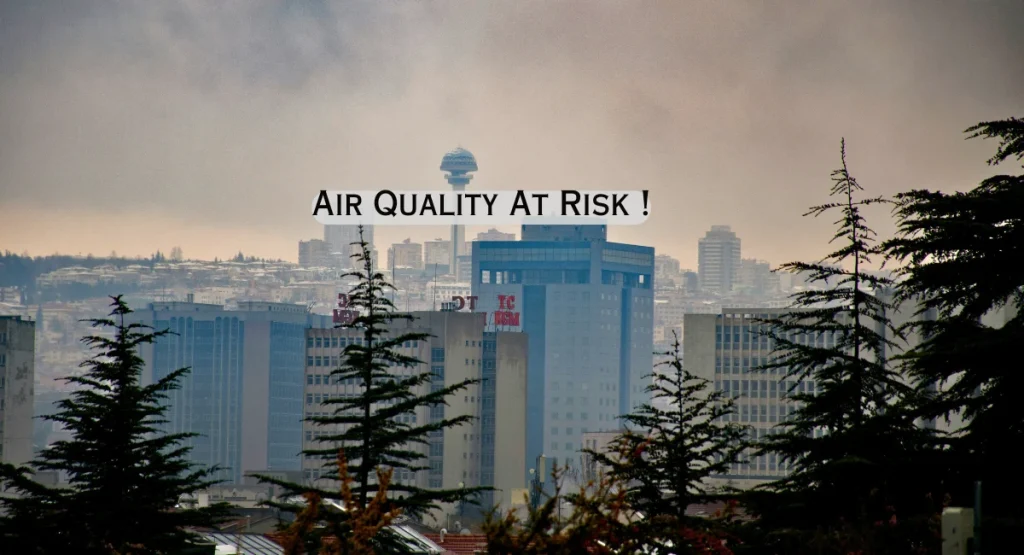
When the Air Turns to Smoke
This year, I’ve watched cities thousands of miles away from any wildfire disappear behind a thick orange haze. It’s strange and unsettling — people waking up to smoky skies, even in places that haven’t seen a single flame. Flights delayed, schools closed, and everyone refreshing their air-quality apps before stepping outside.
According to WMO (World Meteorological Organization) and data from Earth.com, 2025 has already recorded one of the worst global air-quality seasons in recent years. Wildfire smoke that once stayed near forests or mountain ranges now travels across continents — carried by fast-moving jet streams and strong winds.
From North America to Europe and parts of Asia, even countries without wildfires are struggling with unhealthy air.
And this is what makes it alarming. Wildfire smoke is no longer a local issue — it’s a global atmospheric crisis. The particles, chemicals, and gases released during these fires don’t just vanish after the flames die. They mix into the atmosphere, react with sunlight, and worsen pollution levels far beyond the fire zone.
In simple terms, wildfire smoke isn’t just a byproduct of fire — it’s rewriting the world’s air quality map. It’s changing how we measure pollution, how we plan for public health, and how we understand the link between climate and clean air.
The Chemistry Behind the Crisis
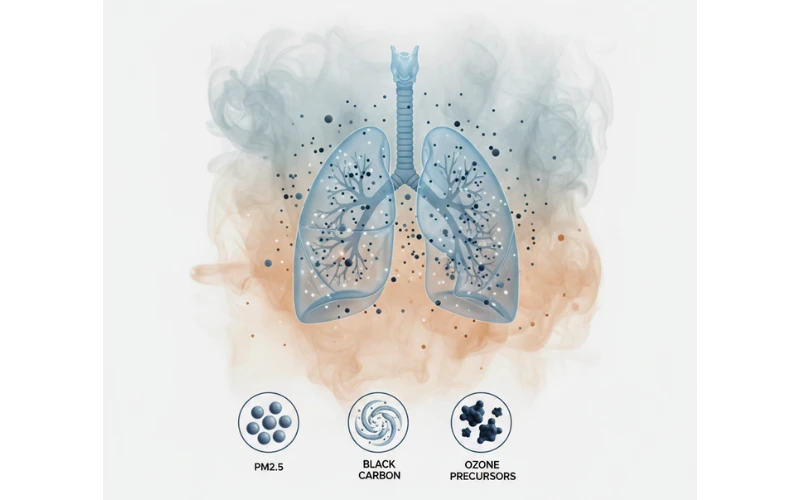
When you look at wildfire smoke, it might seem like just gray air — but inside that haze is a complex mix of gases and tiny particles that can harm your health and the planet. Scientists call this cocktail aerosol pollution, and it’s made up of fine particles like PM2.5, black carbon, carbon monoxide (CO), carbon dioxide (CO₂), and ozone-forming chemicals.
The most dangerous of them all is PM2.5 — fine particles smaller than 2.5 micrometers in diameter. To put that in perspective, they’re about 30 times smaller than the width of a human hair, small enough to slip deep into your lungs and even enter your bloodstream.
Once inside, they can trigger inflammation, breathing problems, heart strain, and long-term respiratory illnesses. It’s one reason doctors call PM2.5 “the silent killer in the air.”

But here’s where the climate connection becomes clear. According to the World Meteorological Organization’s 2024 Greenhouse Gas Bulletin, carbon dioxide and methane levels are now at record highs, heating the planet and creating the hotter, drier conditions that fuel longer and more intense wildfire seasons.
This isn’t just coincidence — it’s a feedback loop: more heat → more fires → more smoke → even warmer air.
And as Earth.com’s smoke model research shows, once that smoke enters the atmosphere, it doesn’t stay local. Wind and weather patterns can carry these pollutants across borders, spreading the impact far from the fire zone — sometimes even halfway around the world.
Fact :
“PM2.5 levels above 35 µg/m³ (micrograms per cubic meter) for 24 hours are considered unhealthy, according to global air-quality standards.”
How Far the Smoke Travels — The New Global Plume
I’ve tracked wildfire smoke plumes crossing borders within just 48 hours — moving from one continent to another like invisible rivers in the sky. It still amazes me how a fire burning in one region can darken the skies thousands of miles away.
Thanks to advanced models like the RRFS Smoke Forecast Model, we now understand how far these particles can go. Scientists use this model to predict plume height, density, and direction, allowing them to warn cities long before the smoke actually arrives.
In 2025, we’ve seen smoke from wildfires in Canada and the U.S. West Coast drift into Europe and even reach parts of Asia under the right jet-stream conditions. This long-range transport means countries untouched by fire are still breathing its effects — often experiencing “Unhealthy” AQI days even without local pollution.
If you could see it on a map, you’d notice wind currents bending across continents, carrying fine smoke particles into dense urban zones. The global air-quality monitoring systems like AirNow and Copernicus Atmosphere Service often show these moving “smoke plumes” as brown-orange streaks circling the planet — a clear sign that wildfire smoke has become a planet-wide phenomenon.
2025 Snapshot: Wildfires, Air Alerts, and Human Impact
This year’s wildfire season has been nothing short of alarming. According to data from the Washington Smoke Blog and reports on IBC World News, multiple regions experienced continuous weeks of poor air quality, forcing millions to stay indoors.
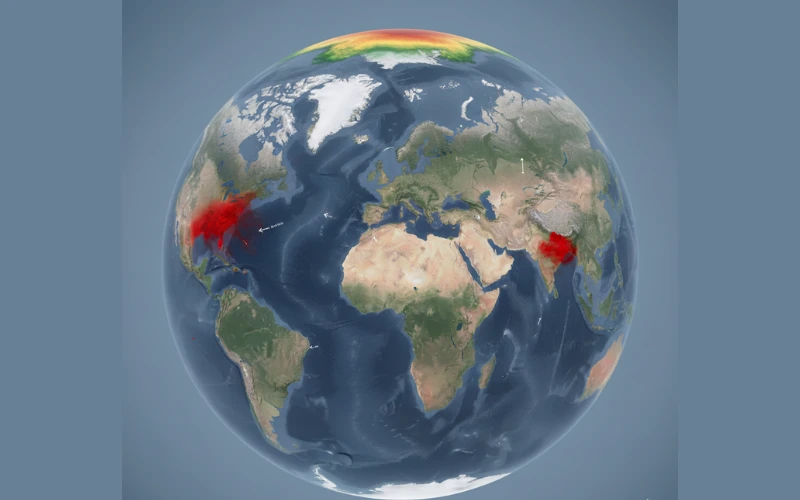
In the United States, a few major cities — including New York, Seattle, and Chicago — declared air-quality emergencies, urging citizens to use N95 masks and limit outdoor activity. Across Canada, the smoke blanketed entire provinces, while parts of Northern India and China reported AQI spikes linked to transcontinental smoke transport.
To give you an idea of scale:
- New York City recorded over 12 “unhealthy air” days in mid-2025, the highest since 2003.
- Vancouver crossed AQI 200 (“Very Unhealthy”) levels twice in July.
- Delhi, already battling urban smog, saw an additional 20% PM2.5 increase during imported smoke episodes.
These numbers don’t just represent pollution; they show a domino effect — school closures, grounded flights, outdoor event cancellations, and surges in hospital visits for asthma and bronchitis. What once felt like a local environmental issue has become a global public health and economic crisis.
What Poor Air Quality Does to the Body
If you’ve ever felt your throat burn or your eyes sting during wildfire season, that’s your body warning you — the PM2.5 is winning. These microscopic particles bypass your nose’s natural filters, settling deep inside your lungs and even entering your bloodstream.
According to MSN Health’s wildfire smoke guide and the World Health Organization (WHO) air-quality fact sheet, even short-term exposure to wildfire smoke can lead to:
- Coughing, sore throat, and headaches
- Asthma flare-ups and shortness of breath
- Eye irritation and fatigue
- Increased risk of heart attack in people with existing conditions
Long-term exposure, especially during repeated smoke events, can raise the risk of chronic bronchitis, reduced lung function, and even cognitive decline due to prolonged oxygen stress.
Long-term exposure, especially during repeated smoke events, can raise the risk of chronic bronchitis, reduced lung function, and even cognitive decline due to prolonged oxygen stress.
Infobox : How Your Lungs React in 30 Minutes of Smoke Exposure
- 10 minutes: Nasal irritation begins
- 20 minutes: Reduced oxygen flow in blood
- 30 minutes: Particles begin settling in the alveoli (lung sacs)
- Long-term: Inflammation increases risk of chronic respiratory illness
The Hidden Urban Problem — Indoor & Underground Air
When we think of air pollution, we often picture outdoor smog or smoky skies. But the truth is, indoor and underground spaces—like subways, offices, and classrooms—can sometimes have even worse air than the streets above.
A recent Air Quality News campaign revealed just how severe pollution can be in these enclosed environments. During heavy wildfire smoke days, particulate matter (PM2.5 and PM10) in underground transport systems rises far above safe limits.
The same happens in office buildings or schools without proper ventilation—polluted air gets trapped and recirculated, turning indoor spaces into microcosms of outdoor pollution.
I’ve seen CO₂ readings and particulate levels in metro systems spike to five times higher than surface air during smoke events. It’s a silent threat because we assume being indoors is safe—but without proper filtration, it isn’t.
Here’s what helps:
- HEPA filters: Capture fine particles, including PM2.5, from recirculated air.
- CO₂ sensors: Help track ventilation efficiency—higher CO₂ means poor air exchange.
- Recirculated ventilation: Using HVAC systems in “recirculate” mode prevents outdoor smoke from entering.
- Green spaces & plants: While not a fix for heavy smoke, they help improve micro-air quality indoors.
When wildfire smoke becomes a recurring event, cities need to start treating indoor air as the next frontier of public health.
Forecasting Smoke — From Models to Mobile Apps
One of the most powerful tools in predicting air quality today is data modeling. Weather agencies use advanced systems like the RRFS Smoke Forecast Model and satellite-based aerosol tracking to predict smoke movement in real time.
As a weather analyst, I rely on these plume forecasts to anticipate next-day health advisories. By studying the plume height, wind direction, and moisture levels, we can predict when smoke will settle or clear.
For everyday readers, several public tools now make this information accessible:
- AirNow.gov – Official U.S. government site for real-time AQI updates.
- Breezometer – Uses AI and satellite data for hyperlocal air-quality alerts.
- IQAir & Plume Labs – Offer app-based forecasts that show PM2.5 trends hour-by-hour.
The combination of science and technology means anyone can check the air quality of their city—or even their street—in seconds. And that awareness is the first step to staying safe.
What We Can Do — Individual and Policy Action
When air quality drops, it’s easy to feel helpless. But we have real, practical steps—both individual and systemic—that make a measurable difference.
A. Individual Actions
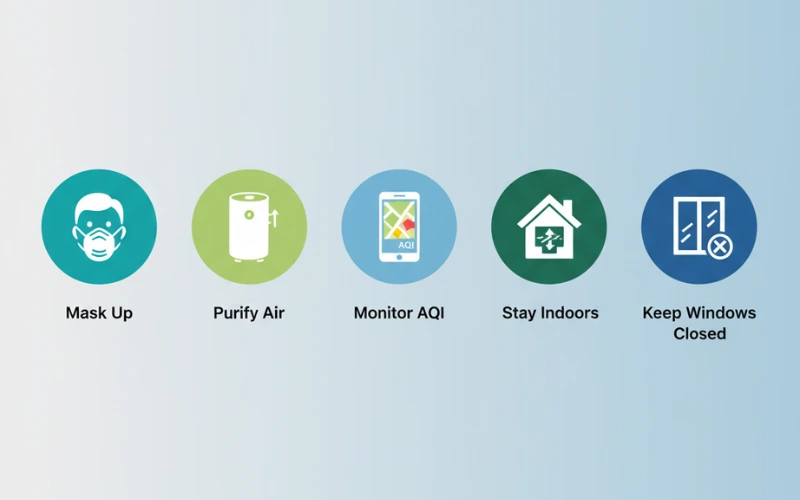
- Use N95/FFP2 masks during smoke events. They block fine PM2.5 particles far better than cloth masks.
- Install HEPA purifiers in living rooms and bedrooms, especially during fire season.
- Create a “clean room”: a single room with sealed windows and filtered air for sensitive groups.
- Track AQI daily using apps like AirNow or Breezometer. Avoid outdoor exercise when AQI >150.

B. Policy Interventions
Governments and cities also play a key role:
- Improve wildfire management: controlled burns, forest health programs, and rapid response systems.
- Upgrade ventilation standards in public buildings and schools.
- Issue emergency air alerts earlier using forecast data.
- Promote green building design with filtration infrastructure.
“As I often say, we can’t stop fires overnight—but we can design cities to breathe better.”
The Climate Connection — Why This Is the New Normal
The deeper we look, the clearer it becomes: climate change and wildfire smoke are part of the same cycle. According to the World Meteorological Organization’s 2024 greenhouse gas report, CO₂ and methane are now at their highest levels in recorded history.
Warmer temperatures dry out forests faster, making them more flammable. When fires burn, they release even more CO₂, which traps more heat—and the cycle repeats. This positive feedback loop means each fire season builds upon the last, turning what used to be rare events into the new normal.
In short, wildfire smoke isn’t seasonal anymore—it’s structural.
Final Thoughts
Air quality is becoming the silent metric of our century — a measure not just of environmental health, but of human resilience.
Every dataset I analyze reminds me that we’re literally inhaling the cost of a warming world. The orange skies, the alerts, the coughing fits—theySo before stepping outside tomorrow, take a moment to check your local AQI. Awareness doesn’t just protect your lungs—it fuels change.
So before stepping outside tomorrow, take a moment to check your local AQI. Awareness doesn’t just protect your lungs—it fuels change. Because the more we understand the air we breathe, the better chance we have of helping our planet breathe again.
Disclaimer
This article is for informational purposes only. Data and insights are based on reputable sources like WMO, WHO, and Air Quality News. It is not medical advice. For health concerns related to air pollution or smoke exposure, please consult a qualified professional or follow official health advisories.
Contents
- 1 When the Air Turns to Smoke
- 2 The Chemistry Behind the Crisis
- 3 Fact :
- 4 How Far the Smoke Travels — The New Global Plume
- 5 2025 Snapshot: Wildfires, Air Alerts, and Human Impact
- 6 What Poor Air Quality Does to the Body
- 7 Infobox : How Your Lungs React in 30 Minutes of Smoke Exposure
- 8 The Hidden Urban Problem — Indoor & Underground Air
- 9 Forecasting Smoke — From Models to Mobile Apps
- 10 What We Can Do — Individual and Policy Action
- 11 A. Individual Actions
- 12 B. Policy Interventions
- 13 The Climate Connection — Why This Is the New Normal
- 14 Final Thoughts
- 15 Disclaimer