


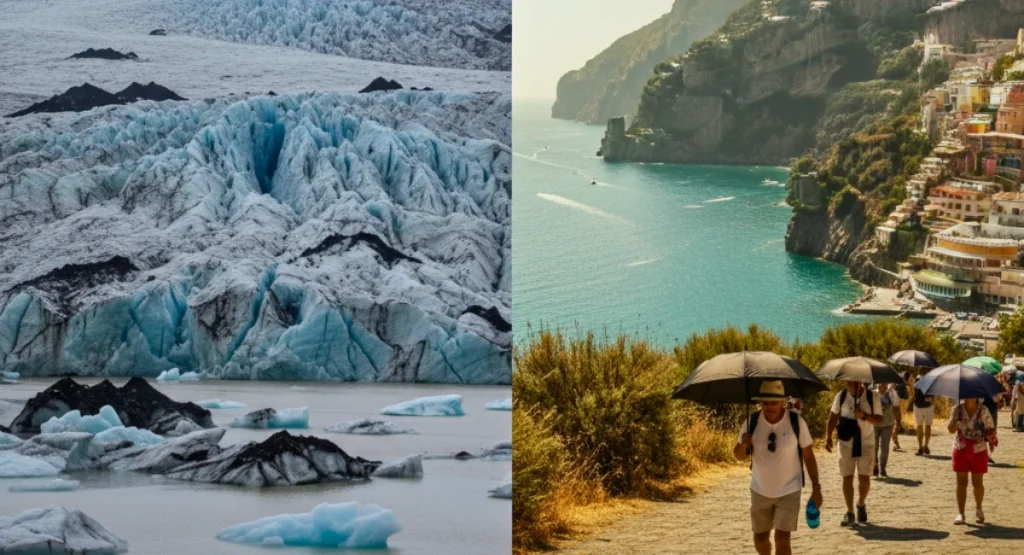
A new wave of extreme weather, melting glaciers, and rising heat is changing how millions travel — from the cold landscapes of Iceland to the warm coasts of Italy.
Climate change is no longer a distant idea. I have been tracking global climate patterns for years, and what I see today is very different from even a decade ago. From Iceland’s shrinking glaciers to Italy’s intense heatwaves, some of the world’s most famous destinations are changing right in front of us.
New climate reports from 2024–25 show that travel as we know it is entering a new era.
Global Snapshot: Tourism Is Being Rewritten by Extreme Weather
According to the latest WMO climate report, Europe is warming twice as fast as the rest of the world. This sharp rise in temperature is affecting weather, landscapes, and even the timing of tourist seasons.
Across the world, extreme weather events have increased by more than 60% in the last two decades. Storms, heatwaves, floods, wildfires, and unpredictable rainfall are becoming common in popular travel regions. When I compare last year’s data to this year’s, the shift is clear — tourism patterns are changing fast.
Many destinations are now facing :
- Shorter winters
- Hotter summers
- More storms
- Water shortages
- Higher wildfire risks
These changes are pushing governments and travel industries to rethink how tourism will look in the future.
Iceland: Melting Ice and Unpredictable Weather
Iceland is one of the destinations where climate change is visible almost everywhere.
Glaciers Shrinking
Iceland’s glaciers have been melting at record speed, according to a recent Icelandic Met Office glacier study. The country has lost over 850 square kilometers of glacier area since 2000. Some glaciers, like Okjökull, have already disappeared completely.
Because of this, famous attractions such as:
- Vatnajökull National Park
- Jökulsárlón Glacier Lagoon
are changing shape every year. Ice-cave tours are becoming shorter because the ice is no longer stable.
Storms Increasing
Weather in Iceland is becoming more unpredictable. Strong winds and sudden storms are causing more flight delays and tour cancellations than ever before. Many locals told me last year that they had never seen weather change so quickly.
Tourism Season Shifting
Winter tourism is getting affected too. Snowfall is reducing, and many travelers now prefer late spring over winter months.
Italy: Heatwaves, Floods, and Water Crises
Italy is facing some of the strongest climate impacts in Europe.
Dangerous Summer Temperatures
In 2023 and 2024, Italy recorded its highest temperatures ever. Sicily touched 48.8°C, the hottest temperature in European history, according to the EU Copernicus heatwave analysis. This extreme heat has reduced outdoor activities, closed tourist sites, and increased hospital visits.
Venice Flooding More Often
Venice now experiences flooding over 100 days a year, compared to only 40–50 days in the 1990s. Rising sea levels and high tides are damaging roads, buildings, and famous tourist areas like St. Mark’s Square.
Wildfires and Water Scarcity
Wildfires in Sardinia and Sicily destroyed thousands of hectares of land. Lakes like Lake Garda have hit their lowest levels in decades, affecting boat tours and water activities.
As someone who closely follows Italy’s climate reports, these changes feel very alarming.
Greece, Spain, and France: Europe’s Tourism Triangle Under Pressure
Climate change is also reshaping tourism hotspots across Southern and Western Europe.
Greece: Too Hot to Travel
Greece has faced temperatures above 45°C, making July and August difficult for visitors. The Rhodes wildfires in 2023 caused Europe’s largest tourist evacuation, with more than 20,000 people moved to safety.
Spain: Water Emergencies
Barcelona declared a water emergency in 2024. Hotel swimming pools were closed, and the city asked tourists to reduce water usage. Many travelers now avoid Spain’s peak summer months because of extreme heat.
France: Alps Losing Snow
The French Alps have lost 35% of their snow cover in just two decades. Low-altitude ski resorts may not be able to operate in the coming years. Paris is also experiencing hotter, more humid summers that make sightseeing uncomfortable.
I often read European climate briefings, and they all highlight the same truth: summers will keep getting hotter, and winters will keep getting shorter.
Switzerland and the United States: Iconic Destinations Transforming
Switzerland’s Glaciers Disappearing
Swiss glaciers lost 10% of their total volume within just two years, according to the Swiss Academy of Sciences glacier report, an almost unbelievable number. Famous spots like the Jungfraujoch Ice Palace and the Matterhorn region are changing quickly because the ice is melting faster than before.
United States Facing Diverse Climate Impacts
The U.S. is also facing massive climate challenges :
- The Maui wildfire in Hawaii damaged large tourism areas.
- Glacier National Park is losing its glaciers rapidly.
- Florida’s coastal erosion is increasing as hurricanes grow stronger.
These changes show that climate pressure is not limited to Europe — it is affecting destinations all around the world.
Travelers Must Prepare for a New Era
Climate change is not only reshaping destinations; it is changing how people travel. Extreme weather is affecting flights, hotels, and local infrastructure. Travel insurance claims related to climate disasters have risen sharply in the last decade.
As someone who studies destination trends, I always advise travelers to :
- Check weather advisories before booking
- Travel during shoulder seasons (spring and autumn)
- Choose destinations that are prepared for climate impacts
- Support sustainable tourism practices
The way we plan trips today must adapt to the new weather reality.
Conclusion: The Future of Travel in a Changing Climate
The world’s most beautiful destinations — from Iceland’s icy wonders to Italy’s warm coastlines — are being reshaped by climate change. These changes are happening in real time, and they will continue to influence how and where we travel.
But there is still hope. With better planning, stronger climate action, and sustainable tourism choices, we can protect many of these places for future generations.
Travel is not ending — it is simply changing. And understanding this change is the first step toward a safer, smarter travel experience.
Disclaimer
This article is based on publicly available climate data, research reports, and news updates. Information may change as new studies are released.


Contents
- 1 A new wave of extreme weather, melting glaciers, and rising heat is changing how millions travel — from the cold landscapes of Iceland to the warm coasts of Italy.
- 2 Global Snapshot: Tourism Is Being Rewritten by Extreme Weather
- 3 Iceland: Melting Ice and Unpredictable Weather
- 4 Glaciers Shrinking
- 5 Storms Increasing
- 6 Tourism Season Shifting
- 7 Italy: Heatwaves, Floods, and Water Crises
- 8 Dangerous Summer Temperatures
- 9 Venice Flooding More Often
- 10 Wildfires and Water Scarcity
- 11 Greece, Spain, and France: Europe’s Tourism Triangle Under Pressure
- 12 Greece: Too Hot to Travel
- 13 Spain: Water Emergencies
- 14 France: Alps Losing Snow
- 15 Switzerland and the United States: Iconic Destinations Transforming
- 16 Switzerland’s Glaciers Disappearing
- 17 United States Facing Diverse Climate Impacts
- 18 Travelers Must Prepare for a New Era
- 19 Conclusion: The Future of Travel in a Changing Climate
- 20 Disclaimer