


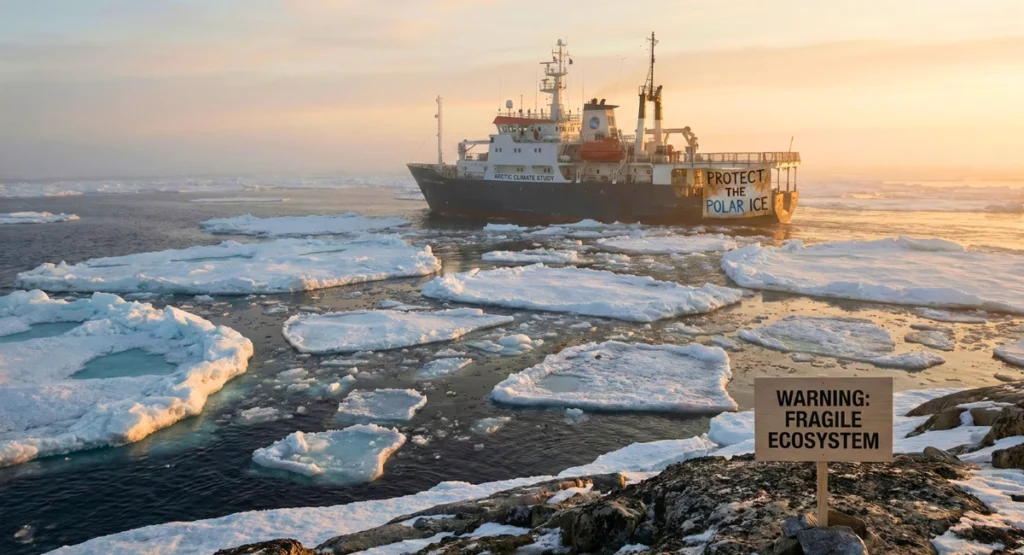
Norway’s four-year pause on Arctic deep-sea mining signals a major shift in global ocean policy and adds new momentum to the worldwide moratorium movement.
Norway has officially paused all deep-sea mining plans in the Arctic until 2029. This decision arrives after new scientific warnings, strong public pressure, and global concerns about how mining could harm the deep ocean.
As I followed this story throughout the week, it became clear that Norway’s move is not only a national decision. It is influencing the entire global debate on whether deep-sea mining should even begin
Norway Pauses Mining Plans Until 2029
Norway announced that it will not approve any deep-sea mining or exploration activities in Arctic waters for the next four years.
This pause gives scientists more time to study the risks before any long-term damage is done.
Key factors :
- No mining in Arctic regions until 2029
- No new exploration licenses
- Government applying a “precautionary pause”
- Decision driven by environmental and global political pressure
This is one of the strongest ocean-protection moves made by a major Arctic nation.
Why Norway Stopped the Process
Several new studies and scientific reviews forced Norway to rethink deep-sea mining. Here are the simplest reasons:
- 30–40% decline in seafloor animals found in mining test sites
- Sediment plumes travel long distances and smother marine life
- Deep-sea ecosystems take centuries or more to recover
- Very little data exists about biodiversity in these zones
- EU nations and Pacific Island countries demanded stronger protection
- Environmental groups warned of “irreversible damage”
When I looked deeper into the scientific reports, one thing stood out:
Scientists still don’t know how fast — or if — the deep ocean can recover.
This uncertainty is one of the main reasons for the pause.
What New Research Reveals (Last 7 Days)
Recent studies released this week helped shape the decision:

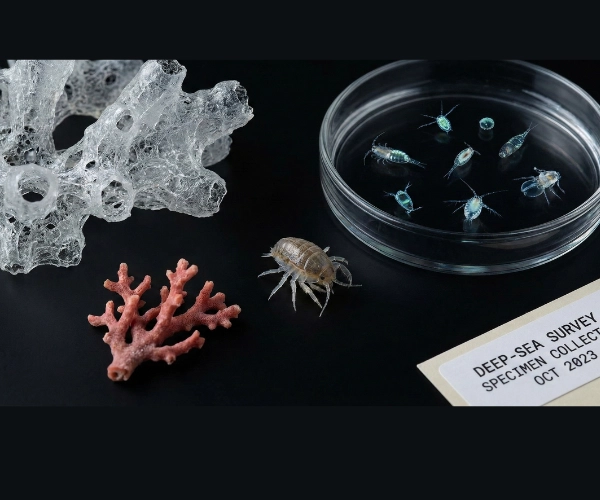
Samples from deep-sea biodiversity studies that reveal major species losses in mining test zones.
- Rare species discovered
New surveys found sponges, corals, and micro-organisms that only live in deep Arctic regions.
- Mining tests removed one-third of visible animals
Scientists saw major declines right after test operations.
Recently published research has shown major impacts on biodiversity. According to a BBC report, mining tests removed one-third of visible animals in disturbed areas.
- Noise pollution could affect whales and migratory species
Low-frequency mining sounds travel far through deep water.
- New monitoring tools introduced
A real-time tracking system now measures mining plumes with high accuracy.
This fresh scientific evidence created urgency around environmental protection.
A Global Push for a Deep-Sea Mining Moratorium
Norway’s pause added new strength to the growing global movement to stop deep-sea mining.
Countries supporting a moratorium or ban include :
Recent international reports show that more than 39 countries have now taken formal positions in favor of a deep-sea mining moratorium.
- France
- Germany
- Spain
- New Zealand
- Chile
- Panama
- Multiple Pacific nations like Samoa, Palau, Tonga
Environmental organizations such as Greenpeace, WWF, and the Deep Sea Conservation Coalition celebrated the pause as a “historic victory.”
From the global conversations I’ve followed, it’s clear that many nations now want a full ban until the science is more complete.
How Norway’s Pause Changes Global Policy
Norway’s decision matters for the world because:
- It sets a strong example for other mining-interested countries
- Gives researchers 4 more years to study deep-sea ecosystems
- Slows down mining companies and investment pressure
- Affects upcoming rules at the International Seabed Authority (ISA)
- Could help expand Arctic ocean protection laws
This pause could reshape how the world approaches deep-sea resources.
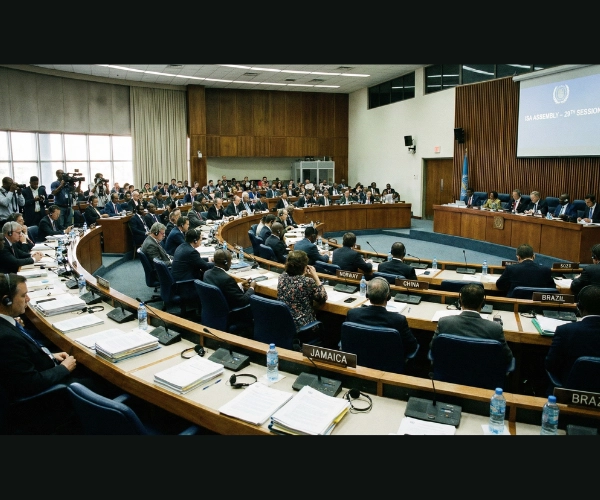
Global negotiations at international governing bodies continue to shape the future of deep-sea mining rules.
What Happens Between Now and 2029 ?
Here is what experts expect in the next four years :
- New environmental studies will be completed
- ISA will review and update global mining regulations
- Companies may face stricter rules or delays
- More countries may officially support a global moratorium
“This pause is not the end of deep-sea mining — but it may be the turning point,” say several ocean researchers.“
Why Companies Wanted Mining — and Why They May Wait Longer
Deep-sea mining companies argue that the world needs more minerals for clean energy and battery manufacturing.
These metals include:
- Nickel
- Cobalt
- Manganese
- Rare earth minerals
But new battery-recycling technology and alternative materials are reducing pressure on deep-sea resources.
Norway’s pause may encourage industries to focus more on recycling instead of extraction.
My Take: A Pause That Gives the Ocean a Chance
From my research and observation, this pause feels necessary. The deep ocean grows slowly, heals slowly, and remains mostly unknown. Mining it without full scientific understanding could cause damage that lasts for centuries.
A four-year pause cannot solve everything — but it gives science a chance to catch up before decisions become permanent.
Turning Point for the Deep Ocean
Norway’s freeze on deep-sea mining is one of the biggest environmental decisions of the year. It slows down industrial pressure, strengthens global calls for a moratorium, and offers the ocean rare protection at a critical time.
The next four years will decide whether deep-sea mining becomes a controlled industry — or a global mistake avoided in time.
Disclaimer
This article is based on publicly available information, scientific studies, and recent news reports as of the time of publication. The purpose of this content is to inform readers about ongoing environmental developments and global policy discussions. While every effort has been made to ensure accuracy, new data or updates may emerge as research and international negotiations continue. This article does not provide legal, financial, or political advice, and all interpretations reflect general analysis for educational use.


Contents
- 1 Norway’s four-year pause on Arctic deep-sea mining signals a major shift in global ocean policy and adds new momentum to the worldwide moratorium movement.
- 2 Norway Pauses Mining Plans Until 2029
- 3 Why Norway Stopped the Process
- 4 What New Research Reveals (Last 7 Days)
- 5 A Global Push for a Deep-Sea Mining Moratorium
- 6 Countries supporting a moratorium or ban include :
- 7 How Norway’s Pause Changes Global Policy
- 8 What Happens Between Now and 2029 ?
- 9 Why Companies Wanted Mining — and Why They May Wait Longer
- 10 My Take: A Pause That Gives the Ocean a Chance
- 11 Turning Point for the Deep Ocean
- 12 Disclaimer