


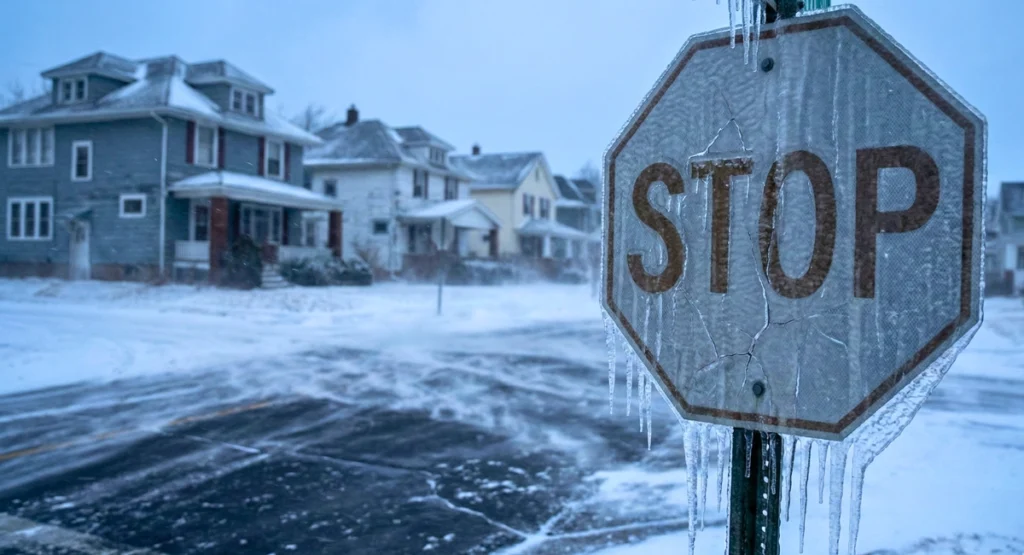
A breakdown of the rapid temperature drop affecting the South and Midwest, including travel impacts and essential safety tips for the freeze.
What’s Going On Right Now ?
A sudden Arctic blast is currently pushing deep into the U.S. South and Midwest, sending temperatures sharply lower and creating dangerous wind chills for millions of people. This isn’t just a standard winter day; it is a rapid freeze event.
When I stepped outside this morning, the wind felt much sharper than the forecast suggested just a few days ago. This quick, biting change is exactly what many communities across the South and Midwest are facing right now.
The situation in brief : A mass of Arctic air has broken loose and is sweeping across the Midwest and down into the Deep South. This sudden cold snap matters because it impacts everything from your morning commute and school schedules to the safety of your home plumbing.
Key Points at a Glance
- Where is it hitting? The blast is strongest across the Midwest (Iowa, Illinois, Ohio) and reaching deep into the South (Texas, Tennessee, Georgia).
- Temperature Drop: Many areas are seeing temps drop 20–30°F lower than they were just 24 hours ago.
- Wind Chill Risk: Feels-like temperatures are plummeting below freezing in the South and near zero (or below) in the Midwest.
- Main Impacts: Watch out for icy patches on roads (black ice), potential frostbite, and heavy strain on home heating systems.
- In this report: I explain exactly what is happening, why it dropped so fast, and how to stay safe.
Where the Arctic Blast Is Hitting the Hardest
U.S. South :
The cold front has pushed rapidly through states like Texas, Louisiana, Mississippi, Alabama, and Tennessee.
In these areas, the temperature drop was drastic. You might have gone to bed with mild weather and woken up to freezing conditions. The biggest danger here is the wind chill. Even if the air temperature is in the 30s or 40s, the wind makes it feel like the teens or 20s.
This affects daily life immediately : school buses may be delayed, and outdoor workers need to layer up significantly more than usual.
U.S. Midwest
As expected, the Midwest—including Kansas, Missouri, Iowa, Illinois, and Indiana—is taking the brunt of the cold.
Here, the winds are stronger, and the actual air temperatures are much lower. While the South is dealing with an unusual chill, the Midwest is battling dangerous, life-threatening cold if you are exposed for too long. We are also seeing scattered snow flurries and squalls in some of these states, reducing visibility.
Why Did the Temperature Drop So Fast ?
Many people are asking why this happened so suddenly. The simple answer involves the Jet Stream.
An Arctic air mass moved south behind a very strong cold front. Essentially, the jet stream “dipped” deep to the south, opening a gate for cold, dense air to slide straight from Canada into the central and southern U.S.
When I look at the current weather charts, I can see a strong vertical push of purple and blue (representing cold air) dropping straight from the north. These quick changes often surprise people because the week started mild, only to turn bitterly cold within hours.
To give you a visual sense of just how massive this temperature anomaly is, look at this projection from meteorologist Ryan Hall that highlights the sheer depth of the freeze :
How the Sudden Cold Snap Is Affecting Daily Life
This isn’t just about needing a thicker coat. A drop this sharp impacts our infrastructure and routine.
- Travel: Roads are becoming slippery. “Black ice” is a major risk on bridges and overpasses. Commutes are taking longer due to reduced visibility and cautious driving.
- Health: There is a significantly higher risk of hypothermia and frostbite. This is critical for the homeless, elderly, and outdoor workers who may not be prepared for Arctic conditions.
- Home & Energy: Heating demand is skyrocketing. If your home isn’t well-insulated, there is a real risk of frozen pipes.
- Work & School: I’ve already seen reports of school delays and minor traffic accidents as drivers struggle to adjust to the sudden shift in road conditions.
The impact on the roads is already visible; check out this footage from CBS Evening News showing the travel chaos and snarled traffic unfolding across the region :
Simple Safety Tips for the Arctic Blast
Please take a moment to check this list. Small actions can prevent big problems during a freeze.
- Layer Up: Dress in layers. Cover your hands, head, and face, especially if the wind is howling.
- Limit Outdoor Time: If the wind chill is near zero or below freezing, frostbite can happen in minutes.
- Drive Smart: Drive slower than usual. Avoid sudden braking on wet-looking pavement—it could be ice.
- Check Your Neighbors: Look in on elderly neighbors or families who might not have adequate heating.
- Protect Pipes: Keep your indoor temperature steady (don’t turn the heat down at night). Open cabinet doors under sinks to let warm air reach the pipes and protect pipes.
- Pets: Bring pets indoors. If it’s too cold for you, it’s too cold for them.
Note: Always follow your local National Weather Service office and emergency management agencies for the most accurate and updated warnings in your specific county.
Short-Term Forecast: What to Expect Next
Based on the current data, here is the outlook for the next 48 to 72 hours :
- In the South: The extreme wind chills should persist for another 24 hours before winds die down, though mornings will remain frosty.
- In the Midwest: The deep freeze will likely hold for at least 3 days.
- The Trend: We do not see a massive warm-up immediately, but the “shock” of the wind should fade by the weekend.
This report is based on the latest forecasts available at the time of writing, and conditions can change quickly in fast-moving winter patterns.
Final Takeaway
To summarize: A sudden Arctic blast has brought strong wind chills and a fast temperature drop to the South and Midwest. While serious, these impacts are manageable if you prepare your home and dress appropriately.
As I track this Arctic blast, my goal is to help you stay one step ahead of the cold and make safe decisions for you and your family. Stay warm.
F.A.Q.
Disclaimer :
This report is for informational purposes only and reflects forecasts available at the time of publication. Weather conditions change rapidly; always consult your local emergency authorities for the most current official warnings. The author assumes no liability for any actions taken based on this information.


Contents
- 1 A breakdown of the rapid temperature drop affecting the South and Midwest, including travel impacts and essential safety tips for the freeze.
- 2 What’s Going On Right Now ?
- 3 Key Points at a Glance
- 4 Where the Arctic Blast Is Hitting the Hardest
- 5 U.S. South :
- 6 U.S. Midwest
- 7 Why Did the Temperature Drop So Fast ?
- 8 How the Sudden Cold Snap Is Affecting Daily Life
- 9 Simple Safety Tips for the Arctic Blast
- 10 Short-Term Forecast: What to Expect Next
- 11 Final Takeaway
- 12 F.A.Q.
- 13 Disclaimer :