


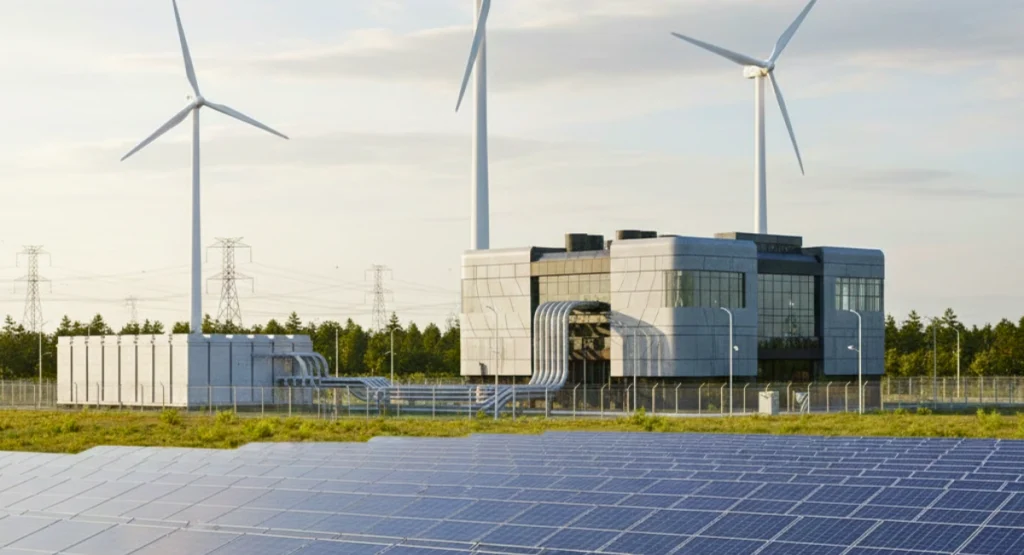
AI is reshaping global electricity demand, and tech companies are now turning to solar and wind to keep their fastest-growing data centers running clean, stable, and affordable.
AI is growing faster than anyone expected. New models need huge amounts of electricity, and data centers across the world are using more power than some entire countries. While researching recent U.S. and global energy reports, I noticed one major shift: solar and wind energy are becoming the new backbone of AI infrastructure.
In this article, I break down how tech companies are moving toward clean power, what technologies make it possible, and why this change matters for our planet.
AI Data Centers Are Using Record Levels of Electricity
AI training and inference demand massive power. According to the International Energy Agency (IEA), data center electricity use will reach 1,000 TWh by 2026 — almost equal to Japan’s yearly consumption.
AI workloads alone may require 10× more energy by 2030.
This sudden rise has forced companies to search for fast, stable, and low-cost energy sources—and solar + wind are leading that shift.
A new analysis shows a massive power shortfall for U.S. data centers as AI demand accelerates.
Why Tech Giants Are Turning to Solar and Wind
- Renewable Energy Is Now Cheaper
Solar costs have dropped 80% since 2010, and wind has fallen by 55%, according to recent BloombergNEF research.
Companies like Google and Amazon sign 20–25-year Power Purchase Agreements (PPAs), which lock in stable electricity prices.
This helps them avoid the rising cost of fossil fuels.
- Solar and Wind Can Be Built Faster
AI growth is fast. Data centers can’t wait 10 years for a new gas or nuclear plant.
A solar or wind farm can be deployed in 12–24 months, making it the fastest energy solution available today.
- Global Rules Are Getting Stricter
Governments now want low-carbon data centers:
- U.S. clean power targets
- EU Green Deal
- India’s renewable data center guidelines
- Singapore and UAE sustainability rules
So companies are shifting to green energy to reduce emissions and meet regulations.
Real Projects Leading the Renewable-Powered AI Boom
Google’s Solar-Battery Data Center in Nevada:
Google built a 350-MW solar farm with battery storage to support its AI workloads.
Their Nevada, Texas, and Finland data centers now run on 90–100% renewable energy.
Microsoft’s Wind-Powered AI Region in Scotland:
Microsoft uses offshore wind to power its cloud and AI services.
This move cuts carbon emissions and supports clean energy in the region.
Amazon’s Multi-State Solar Corridor:
Amazon has 600+ renewable projects across the U.S., with massive solar arrays powering AWS cloud and AI systems in Virginia, Texas, and Ohio, according to the Amazon Sustainability reports.
🇮🇳 India’s Emerging Hybrid Solar-Wind AI Zones:
With a 1-GW hybrid farm, companies like Adani are powering new AI and cloud facilities in Noida and Hyderabad.
The Technology Making This Possible
Advanced Battery Storage
New storage systems help keep data centers running even when the sun isn’t shining or wind is low:
- LFP batteries
- Sodium-ion batteries
- Gravity-based storage systems
Cooling Innovation
Cooling consumes 40% of a data center’s power.
Google’s DeepMind AI cooling system cut cooling energy use by 40%.
Liquid cooling and heat-reuse systems are also becoming popular.
Grid Modernization in the U.S.
Recent U.S. bills aim to support AI-era electricity demand by strengthening grids and improving clean energy integration.
The Biggest Challenge: AI Energy Demand Is Growing Even Faster
Even though solar and wind are growing quickly, AI demand is still rising 5× faster.
Key statistics :
- By 2030, data centers may consume 4% of all global electricity.
- Renewable capacity must grow 3× faster to keep up with AI adoption.
Can Solar and Wind Power AI 24/7?
Solar and wind are not available all the time.
To solve this, companies use:
- Hybrid solar + wind farms
- Battery storage
- Smart load balancing (moving AI tasks to regions with available renewable power)
Some companies even shift AI workloads between continents based on sunlight and wind availability.
What This Shift Means for the Planet
If renewables continue to scale, the world could see:
- Lower long-term carbon emissions
- Cleaner and more stable grid systems
- Reduced heat waste through heat-recovery systems
- Efficient cooling with less water usage
From what I’ve seen across recent government and industry energy findings, AI’s rapid growth is pushing renewable innovation at a speed we haven’t witnessed before.
Key Facts
- Data centers may use 1,000 TWh by 2026
- Solar costs dropped 80% since 2010
- Wind energy now costs 55% less
- Google’s cooling AI reduced energy use by 40%
- Amazon leads with 500+ renewable projects
- Microsoft uses offshore wind for AI in Europe
Looking Forward
The energy transition is entering a new phase.
AI is not slowing down, and neither is the world’s need for electricity. Solar and wind are becoming the fastest and cleanest way to power the next generation of AI systems.
The next five years will decide whether renewable energy can truly carry the weight of the global AI boom. What we are watching right now is not just an energy transition—it’s a new technological revolution.
Disclaimer
The information presented in this article is based on publicly available reports, industry data, and recent news from trusted global energy and technology sources. While every effort has been made to ensure accuracy, renewable energy projects and AI infrastructure developments may change over time. This article is intended for general informational and educational purposes only and should not be considered financial, technical, or investment advice. NatureSignals.com is not responsible for any decisions made based on the content provided here. Readers are encouraged to verify facts independently before drawing conclusions.


Contents
- 1 AI is reshaping global electricity demand, and tech companies are now turning to solar and wind to keep their fastest-growing data centers running clean, stable, and affordable.
- 2 AI Data Centers Are Using Record Levels of Electricity
- 3 Why Tech Giants Are Turning to Solar and Wind
- 4 Real Projects Leading the Renewable-Powered AI Boom
- 5 The Technology Making This Possible
- 6 Advanced Battery Storage
- 7 Cooling Innovation
- 8 Grid Modernization in the U.S.
- 9 The Biggest Challenge: AI Energy Demand Is Growing Even Faster
- 10 Can Solar and Wind Power AI 24/7?
- 11 What This Shift Means for the Planet
- 12 Key Facts
- 13 Looking Forward
- 14 Disclaimer