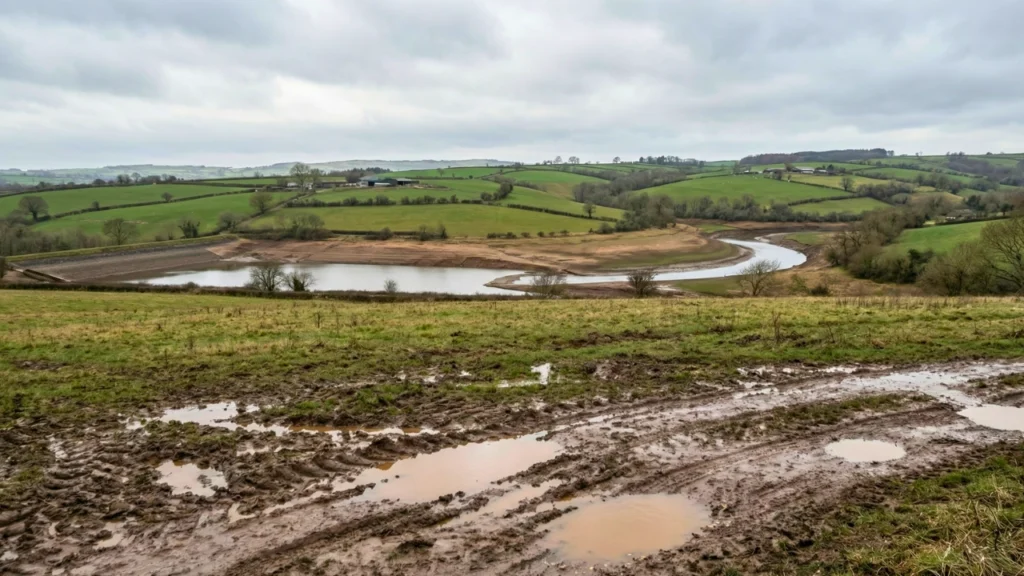
Recent rainfall has eased pressure, but experts say true drought recovery in the West Country takes much more than rain.
Rain has finally returned to the West Country after a long dry spell. Reservoir levels are rising, rivers look fuller, and officials say the immediate pressure on water supplies has eased.
But does that mean the drought is truly over?
The short answer : not yet. Rain helps, but drought recovery is more complex than it looks. To understand what’s really happening, we need to look beyond surface-level improvements.
What the Recent Rainfall Has Actually Improved
There is no doubt the recent rainfall has made a difference. Some positive changes are clearly visible.
- Reservoir levels have increased
- Rivers and streams are flowing again
- Short-term water supply stress has eased
When I look at recent updates from water authorities, it’s easy to see why many people feel the crisis has passed. Visually, the landscape looks healthier than it did a few weeks ago.
But appearances can be misleading.
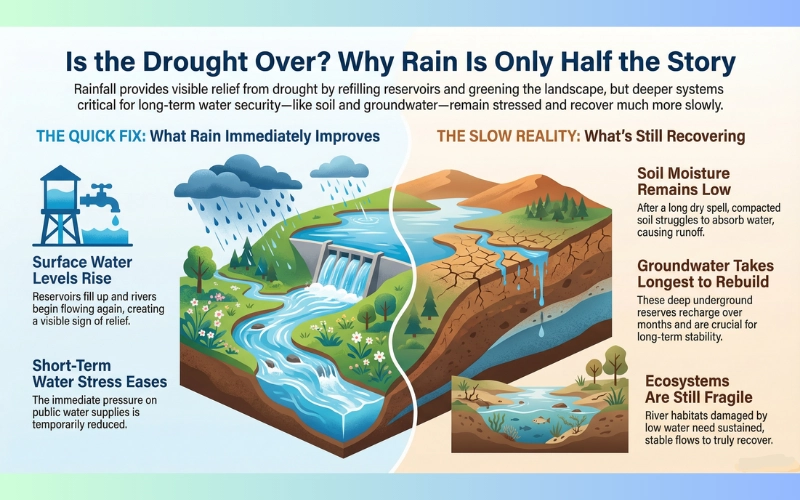
Rain can quickly improve rivers and reservoirs, but deeper systems like soil moisture, groundwater, and ecosystems recover far more slowly after drought.
Why Rainfall Alone Doesn’t End a Drought
A drought is not just about a lack of rain. It is about how water moves through the environment.
Here’s what often happens after heavy rainfall :
- Dry soil struggles to absorb water
- Rain runs off quickly into rivers and drains
- Less water reaches underground storage
This means rainfall can improve conditions above ground, while deeper systems remain stressed.
In simple terms, rainfall helps fast, but recovery happens slowly.
Recent forecasts also show how rainfall often arrives in short, intense bursts, which can increase runoff rather than helping long-term drought recovery.
What Has Not Fully Recovered Yet
Soil Moisture Is Still Low
After a prolonged dry period, soil becomes compacted and less absorbent. Even with rain, it takes time for moisture levels to return to normal. How rainfall arrives also matters, as short and intense weather systems can increase runoff instead of helping long-term water recovery.
This concern is not just theoretical. Farming groups are already warning that drought pressures are extending into winter, even after recent rainfall.
Groundwater Takes the Longest to Rebuild
Groundwater is one of the most important long-term water sources. It recharges slowly, often over many months. A few weeks of rain is usually not enough.
River Ecosystems Are Still Fragile
Low water levels over summer can damage river habitats. While flow has improved, ecosystems need sustained stability to fully recover.
This is the part often missing from headlines. Rainfall helps, but it does not reset everything overnight.
Why Winter Rain Doesn’t Guarantee Safety
It might seem logical to assume winter rain will solve the problem. In reality, winter brings its own challenges.
- Rain often falls in short, intense bursts
- Water flows away faster instead of soaking in
- Cold soil absorbs moisture less efficiently
As a result, even a wet winter can leave regions vulnerable when spring arrives.
This is why experts remain cautious, even when rainfall totals improve. According to the UK Met Office reports, drought recovery depends not just on how much rain falls, but on how consistently it replenishes soil and groundwater over time.
Why Farmers and Water Planners Are Still Careful
Despite better conditions, many farmers and water managers are not celebrating yet.
They are focusing on :
- Planning for unpredictable weather patterns
- Protecting crops and soil health
- Managing water demand carefully
From what I’ve seen in recent briefings, the approach is clear: treat this as a pause, not a full recovery.
That mindset is key to avoiding future shocks.
What a True Drought Recovery Actually Looks Like
A real recovery usually includes several long-term changes, not just rainfall.
- Consistent, moderate rain over time
- Healthy soil moisture levels
- Gradual groundwater recharge
- Stable river flows
- Controlled water demand
Only when these factors align can drought risk truly fall.
Why This Matters Going Forward
Climate patterns are becoming less predictable. Long dry spells followed by intense rainfall are becoming more common.
That means recovery periods are :
- Shorter
- More fragile
- Easier to reverse
The real question now isn’t whether it rained. It’s whether the region is better prepared for the next dry stretch.
From what current data shows, preparation matters more than celebration.
What This Means for the West Country Now
The West Country is in a better position than it was earlier this year. That’s important. But drought recovery is not a switch that flips with rainfall. It’s a process that takes time, planning, and caution. And for now, that process is still underway.
Disclaimer : This article is for informational purposes only and is based on publicly available data, expert analysis, and current regional conditions.

Contents
- 1 Recent rainfall has eased pressure, but experts say true drought recovery in the West Country takes much more than rain.
- 2 What the Recent Rainfall Has Actually Improved
- 3 Why Rainfall Alone Doesn’t End a Drought
- 4 What Has Not Fully Recovered Yet
- 5 Soil Moisture Is Still Low
- 6 Groundwater Takes the Longest to Rebuild
- 7 River Ecosystems Are Still Fragile
- 8 Why Winter Rain Doesn’t Guarantee Safety
- 9 Why Farmers and Water Planners Are Still Careful
- 10 What a True Drought Recovery Actually Looks Like
- 11 Why This Matters Going Forward
- 12 What This Means for the West Country Now