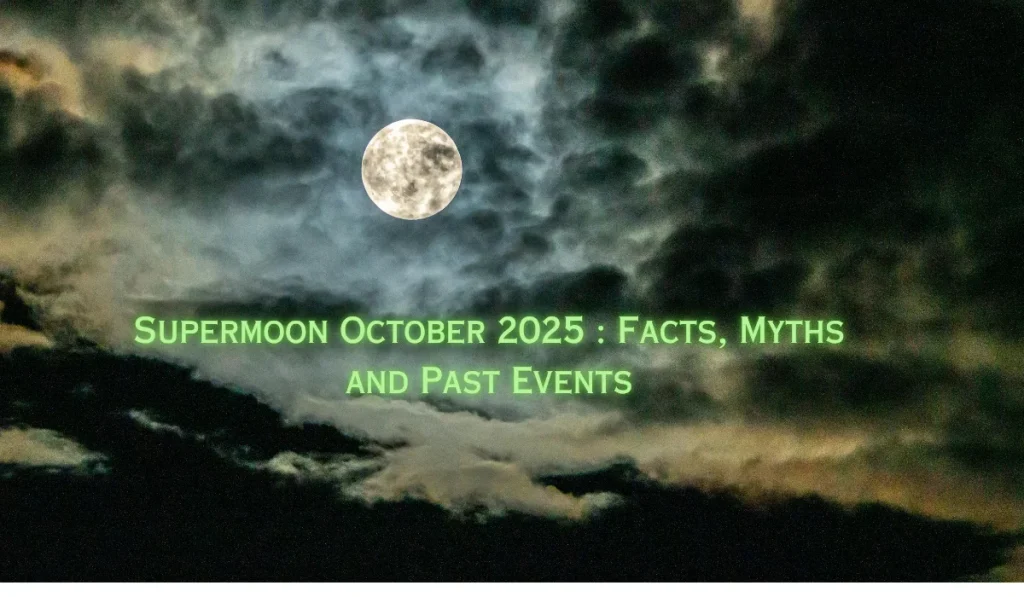
Last night on my rooftop, “the Moon looked like a bright silver coin hanging just above the buildings.” It felt closer, like I could almost touch it. Have you ever looked up and thought: Is the Moon really bigger tonight—or is my mind playing tricks?
That’s the magic of a supermoon — a full moon that happens when the Moon is near its closest point to Earth.
Fast Facts to Beat Misinformation
- A “supermoon” is a full moon near perigee (Moon’s closest point to Earth).
- It looks slightly larger & brighter than usual.
- The low-on-the-horizon Moon Illusion makes it feel even bigger.
- No special glasses needed—just your eyes.
What Exactly Is a Supermoon?
The Moon’s orbit around Earth isn’t perfectly round; it’s oval. Sometimes the Moon is closer (perigee), sometimes farther (apogee). When a full moon coincides with perigee, we call it a Supermoon.
The change isn’t dramatic, but you’ll notice the Moon looks bigger and brighter—especially near the horizon. Think of it like sitting closer to a campfire: even a small shift makes the glow warmer.
“Full moon near perigee = supermoon.”
Why This One Matters
- This October’s supermoon is special because it doubles as a Harvest Moon in some regions—the full moon closest to the autumn equinox.
- Reports describe it as larger, brighter, and especially stunning at moonrise and moonset, when landmarks frame the view.
- For me, what makes it matter isn’t just the size—it’s the chance to step outside for five quiet minutes and feel connected to something much bigger.
Past Supermoon Moments & What They Teach Us
I’ve always believed that looking back at past celestial events makes the one we’re about to witness feel even more special. The October 2025 supermoon might feel like a once-in-a-lifetime show, but truth be told, the Moon has stunned us many times before.
November 14, 2016 – The “Extra Supermoon”
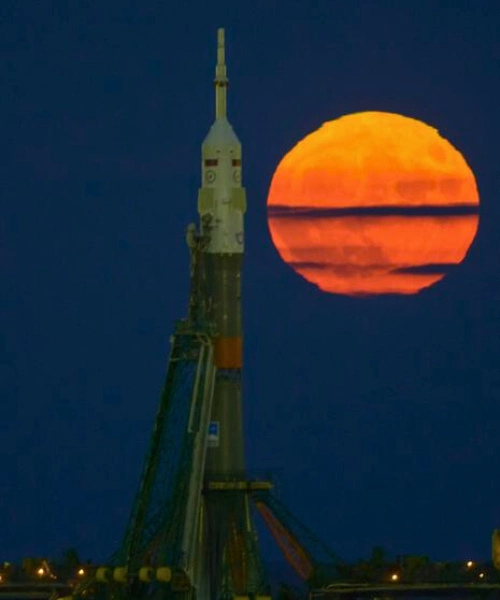
This was the closest supermoon since 1948, appearing 14% bigger and 30% brighter. Cities worldwide buzzed with rooftop parties and photographs.
January 31, 2018 – The Super Blue Blood Moon
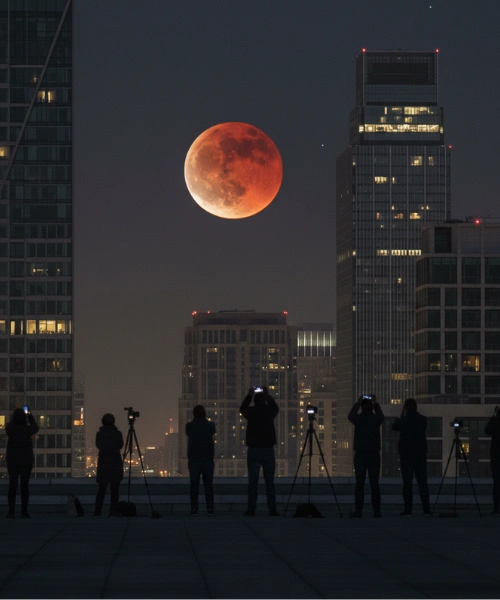
A triple event: supermoon + blue moon + total lunar eclipse. The blood-red glow captured imaginations, blending science with myth.
August 30, 2023 – The Blue Supermoon
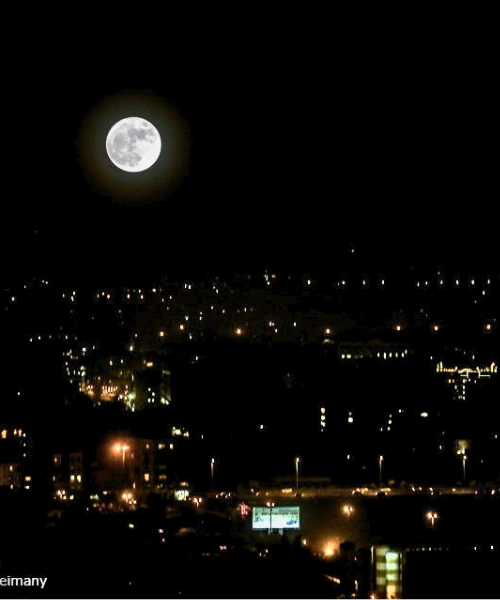
The last of its kind until 2037. Social media feeds were flooded with glowing skyline shots, proving the Moon is still the world’s favorite shared view.
Image Credit: Mehr News Agency/ Wikimedia Commons, licensed under CC BY 4.0
Why These Matter for 2025
Each of these moments tells us something: the Moon might repeat its cycles, but each viewing feels fresh. October 2025’s supermoon may not break size records, but it will be unforgettable because of its timing and visibility.
If you missed the others, this is your chance to create your own memory. Even five minutes on your balcony or street corner can make your evening feel different. But extreme weather like heatwaves can affect how comfortable that night sky viewing feels.
When and Where to Look
Best time: moonrise (or moonset if you’re up early). The horizon view makes the Moon look huge. Choose a spot with an open eastern horizon — like a park, waterfront, or rooftop.
I like to set a quick reminder for moonrise, step outside, and just watch for ten minutes. No telescope needed, just curiosity.
Myths to Skip
- Myth: It’s unsafe to watch.
- Truth: The Moon is safe to view with bare eyes.
- Myth: It’s massively larger.
- Truth: Only slightly bigger; the illusion does the rest.
- Myth: Telescope required.
- Truth: Not at all.
“I like to think of the supermoon as a natural streetlamp—brightening the world without needing electricity.”
Bigger Picture: What Comes Next?
Supermoons aren’t one-offs. Keep a simple journal: date, time, mood. You’ll see patterns over the months. If you’re hooked, mark the July 2028 total solar eclipse for your sky calendar. Just like snowfall reports across the U.S. show how seasons shift, the sky also follows its own rhythm.
Curiosity is the best telescope.
What Did You Notice?
Here’s my question for you: What was the first thought when you saw tonight’s supermoon? Did it seem closer? Did you try a photo? Comment your city and one line—I’ll feature a few in an update.
Disclaimer
This article is based on publicly available astronomy reports and news coverage. Local moonrise times and visibility vary by region and weather—check a trusted source before heading out. This is for general educational purposes only.
Contents
- 1 Fast Facts to Beat Misinformation
- 2 What Exactly Is a Supermoon?
- 3 Why This One Matters
- 4 Past Supermoon Moments & What They Teach Us
- 5 November 14, 2016 – The “Extra Supermoon”
- 6 January 31, 2018 – The Super Blue Blood Moon
- 7 August 30, 2023 – The Blue Supermoon
- 8 Why These Matter for 2025
- 9 When and Where to Look
- 10 Myths to Skip
- 11 Bigger Picture: What Comes Next?
- 12 What Did You Notice?
- 13 Disclaimer