
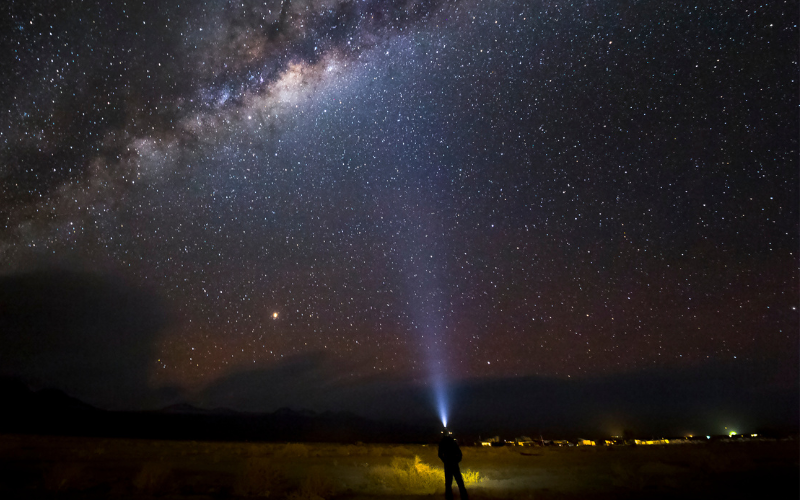
Whenever I look up at the night sky, the Moon feels more than just a glowing satellite — it feels like Earth’s closest cosmic friend. Honestly, I’ve always been fascinated by how its gravity, light, and cycles seem to connect with not only our planet but maybe even us as humans.
Have you ever wondered if the Moon could actually influence your mood, sleep, or energy ? Let’s explore this together.
What is Lunar cycle ?
The lunar cycle is basically the Moon’s monthly rhythm. It takes about 29.5 days to move from a new moon (completely dark) → waxing (growing light) → full moon (fully bright) → waning (shrinking light).
For me, I sometimes treat this cycle like nature’s calendar. Each phase feels like a reminder — fresh starts, reflections, or letting go. Do you also notice your mood shifting when the Moon is full or disappearing?

Gravitational Pull and Earth’s Rhythms
We all know the Moon controls tides. Twice a day, oceans rise and fall because of its pull. During full and new moons, when the Moon and Sun work together, tides get extra high—“spring tides.” Quarter moons bring gentler “neap tides.”
What fascinates me is how animals and even plants seem tuned to this rhythm. For example:
- Corals often release eggs during full moons.
- Crabs and fish spawn with lunar tides.
- Even some plants grow in sync with the Moon’s orbit.
Whenever I read this, I feel like the Moon is silently conducting an orchestra that Earth’s ecosystems follow. Amazing, right?
These examples show that lunar cycles are a biological signal for Earth’s ecosystems.

Moonlight and Human Sleep
Now, let me share something personal—I’ve noticed I sometimes sleep lighter around full moons. Have you felt that too? Turns out, I’m not imagining it.
- A 2021 study in Science Advances found people fell asleep later and slept less in the five nights leading up to a full moon, even in rural communities with no electricity .
- Current Biology research also reported shifts in REM sleep timing across lunar phases .
This suggests the Moon’s phases may act like a natural dimmer switch for our circadian rhythms, subtly shifting our body clocks.
Hormones, Heart, and Body Cycles
Here’s what science says:
- Hormones: A 2021 study suggested men’s testosterone levels dipped and cortisol levels rose during the full moon.
- Heart and blood: A 2021 study on diabetic patients found no effect on blood pressure, but did see changes in blood sugar and heart rate across lunar phases .
- Menstrual cycles: Though the Moon’s cycle (29.5 days) is close to the average menstrual cycle, a large study of 529 women found no consistent synchronization .
Overall, there’s no evidence of dramatic changes, but small physiological ripples exist.
Lunar Influence on Mental and Emotional Health
We’ve all heard the word “lunacy” linked with the full moon. But does it really make us go mad?
From my reading:
- Reviews of thousands of medical records found no increase in psychiatric admissions, ER visits, or violence during full moons .
- But studies on bipolar disorder patients reveal mood cycles that strangely track 14–15 day lunar tidal patterns. Some patients even showed regular switches between depression and mania in sync with lunar phases .
- Scientists suggest that disrupted sleep, circadian rhythm changes, or even subtle gravitational/magnetic shifts may play a role .
So while general populations may not be strongly affected, certain vulnerable groups could be more sensitive to lunar rhythms.
Do Moon Phases Affect Everyone?
Here’s what I’ve realized—it’s not the same for all of us. Some people (like those living close to nature or with mood disorders) feel the Moon’s effects more strongly. Others? Barely at all.
For me, the full moon often makes me more restless and reflective. What about you— do you feel calmer, anxious, or more creative on certain nights?
Inner Tides
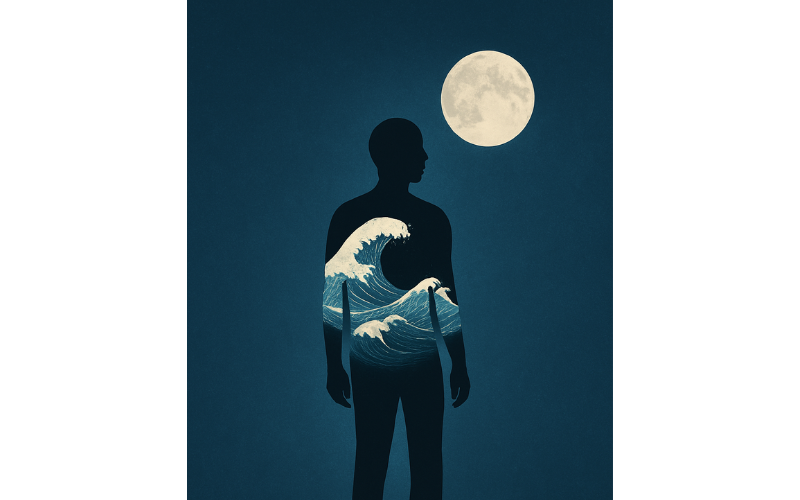
Since we’re nearly 70% water, it makes me wonder: if the Moon pulls the oceans, could it also create tiny tides within us?
While the gravitational pull on our fluids is far weaker than on the seas, some scientists believe even small fluctuations could influence our cells, hormones, and mood rhythms.
Think of it this way: the Moon is Earth’s natural metronome, keeping time for oceans, ecosystems, and maybe even the quiet shifts in our own biology. It is this dual role—scientific and symbolic—that has made the Moon a source of wonder across cultures and generations.
Simple Takeaways for You
Here’s how I personally try to align with lunar energy, and maybe you can try too:
- Track your own cycle: Journal your mood, sleep, and energy across lunar phases. Patterns might surprise you.
- Mindful full moon nights: If you’re sensitive, try better sleep hygiene—dim lights, reduce screen time, and practice calming routines.
- Use symbolism: New moons = fresh starts, full moons = reflection, waxing = growth, waning = letting go.
Quick cheatsheet : - Full Moon → Sleep & heightened emotions
- New Moon → Introspection & low energy
- Waxing Moon → Growth & motivation
- Waning Moon → Healing & letting go
Do you already notice these shifts in yourself ?
Final thoughts
For me, the Moon is a reminder that life flows in cycles — growth, rest, and renewal. Tuning into it helps me feel more balanced. Even if science says the effects are small, the symbolism and awareness are powerful.
So, next time you look up at the night sky, maybe pause and ask yourself: what rhythm is the Moon reflecting in me right now?
Disclaimer
This article is for informational and educational purposes only. It summarizes scientific studies, cultural perspectives, and general observations about the Moon’s phases. The content should not be taken as medical advice, diagnosis, or treatment.
If you have concerns about your sleep, mood, or health, please consult a qualified healthcare professional.