


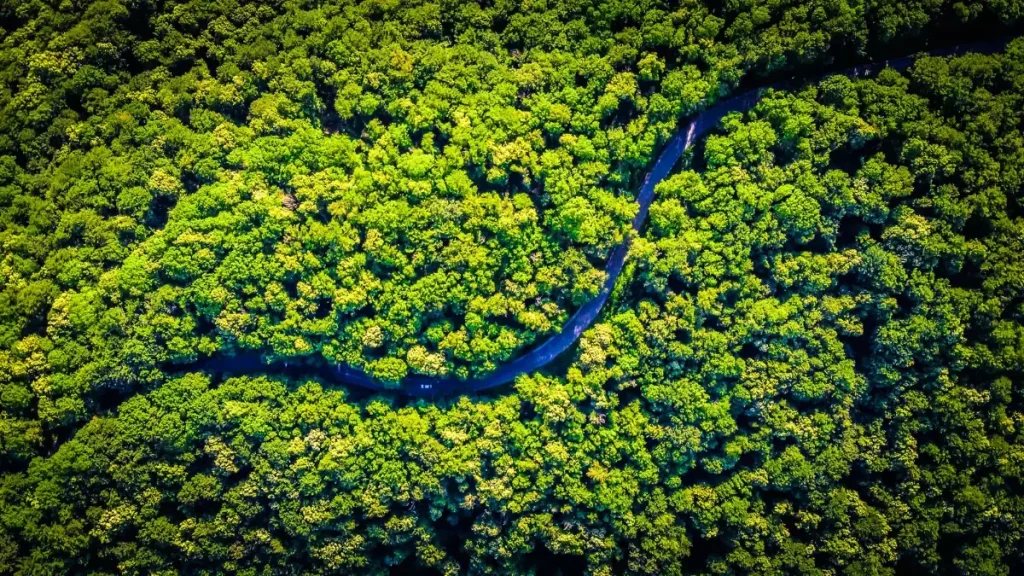
In a landmark environmental partnership, Google has joined forces with a Brazilian reforestation startup to scale up forest restoration across the Amazon basin—one of the world’s most critical carbon sinks.
The deal makes the São Paulo-based company Google’s top carbon-credit supplier, underscoring how technology giants are turning to nature-based solutions to balance their emissions and meet global sustainability targets.
Carbon Offsets Meet Climate Technology
Under the agreement, the reforestation startup will expand projects that restore degraded Amazon land by planting native tree species and protecting biodiversity corridors.
Using AI-powered satellite tracking and blockchain verification, the startup ensures every planted acre and every ton of carbon absorbed can be scientifically measured.
For Google, those verified credits will contribute to its net-zero by 2030 goal—an ambition shared by a growing list of U.S. corporations seeking transparent, high-impact offsets.
“It’s not just about neutrality; it’s about regeneration,” said one Google sustainability executive quoted in the announcement.
The Rise of Brazil’s Reforestation Startups
Brazil has become a global hotspot for climate-tech innovation.
Dozens of reforestation startups have emerged, blending ecological science with data analytics to fight deforestation that has stripped nearly 17 percent of the Amazon since the 1970s.
The firm leading Google’s partnership is among the pioneers in this field.
Its projects combine drone seeding, soil restoration, and carbon accounting systems certified by international climate registries.
By aligning with Big Tech investment, it demonstrates how green startups from the Global South are shaping the next chapter of corporate climate action.
What Are Carbon Credits—and Why They Matter


Each verified ton of carbon removed from the atmosphere generates a credit that companies can buy to offset their own emissions.
The Amazon’s restoration potential makes Brazil a dominant player in this fast-growing market, projected to exceed $100 billion by 2030, according to analysts.
But quality and transparency remain key concerns.
That’s where tech-driven reforestation startups stand apart: by offering verifiable, measurable impact rather than theoretical offsets—something investors and regulators are increasingly demanding.
A Win for the Amazon—and for the Climate Economy
Beyond corporate optics, the partnership injects direct funding into local and Indigenous communities who manage many of the replanting zones.
Jobs, education programs, and sustainable farming practices are part of the package, ensuring that environmental restoration also strengthens regional livelihoods.
For Google, the move cements its leadership in the sustainability space, following earlier investments in renewable energy and circular-economy innovation.
For Brazil, it signals a future where environmental stewardship and entrepreneurship grow hand in hand.
The Bigger Picture: Tech Giants Turn to Nature
Across the United States and Europe, companies are increasingly seeking nature-based carbon solutions rather than relying solely on industrial carbon capture.
The collaboration between Google and the Brazilian reforestation startup represents a model that could spread globally—where artificial intelligence monitors the planet’s lungs and verifies every ton of CO₂ absorbed.
Environmental economists see this as a powerful example of how private capital can accelerate reforestation at the scale once thought possible only by governments or NGOs.
Upcoming Changes in the Carbon Credit and Reforestation Landscape
In the coming years, the global carbon credit market is expected to undergo major reforms aimed at improving transparency and verification. Governments and international climate bodies are planning to introduce standardized certification systems to ensure every carbon credit truly represents a measurable environmental benefit.
This shift will open new opportunities for every reforestation startup working with advanced monitoring tools like AI, blockchain, and satellite mapping to verify the authenticity of carbon sequestration efforts.
Moreover, as stricter emission regulations roll out across the U.S. and Europe, demand for reforestation startup collaborations will skyrocket.
Tech companies, financial institutions, and even governments are now investing in long-term reforestation partnerships rather than one-time offsets.
These upcoming policy and market changes will likely redefine sustainability strategies—making reforestation not just a climate solution but a mainstream business model for environmental restoration and economic growth.
Closing Thought
The Amazon’s recovery will take decades, but every tree planted brings the planet closer to balance.
With a U.S. tech leader backing a Brazilian reforestation startup, the world’s largest rainforest just gained a powerful ally—one that proves technology and nature don’t have to compete; they can collaborate.
Disclaimer: The information in this article is sourced from verified reports and industry data as of November 2025. It is provided for educational and informational purposes only. Facts and partnerships involving the reforestation startup may evolve over time, and readers are advised to check official updates for accuracy.


Contents
- 1 Carbon Offsets Meet Climate Technology
- 2 The Rise of Brazil’s Reforestation Startups
- 3 What Are Carbon Credits—and Why They Matter
- 4 A Win for the Amazon—and for the Climate Economy
- 5 The Bigger Picture: Tech Giants Turn to Nature
- 6 Upcoming Changes in the Carbon Credit and Reforestation Landscape
- 7 Closing Thought