


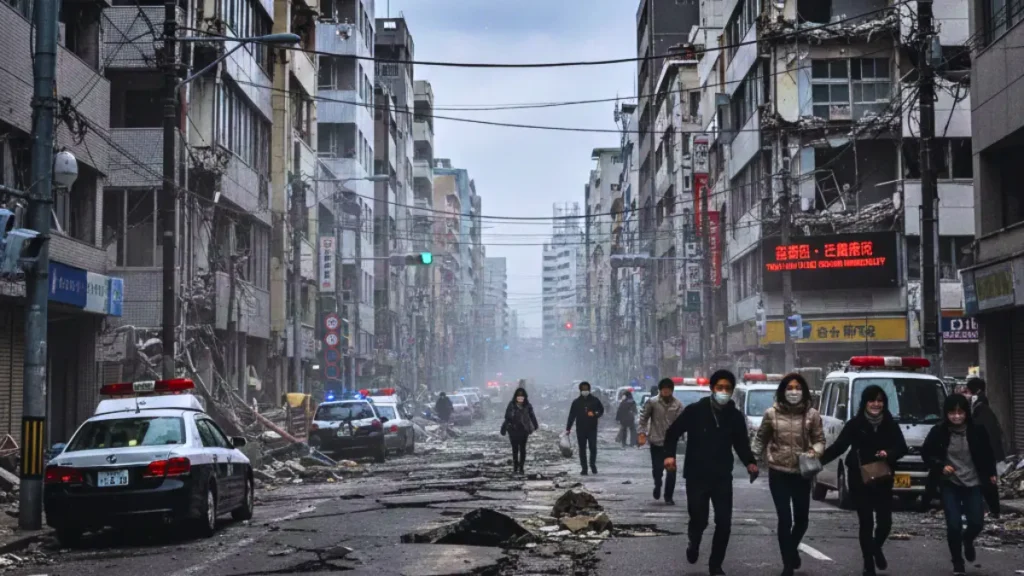
Powerful 7.6 Quake Jolts Northeastern Japan
Tokyo, Japan — A powerful earthquake in Japan measuring 7.6 magnitude struck the country’s northeastern region on Monday evening, sending shockwaves across multiple prefectures and forcing authorities to issue tsunami warnings for coastal communities.
The Japan Meteorological Agency (JMA) confirmed that the quake occurred at 14:15 UTC, with its epicenter located 73 kilometers east-northeast of Misawa at a depth of approximately 53 kilometers.
The quake, which the JMA later revised from 7.6 to 7.5 magnitude based on refined seismic data, was strong enough to shake buildings hundreds of kilometers away, temporarily disrupt transportation systems, and prompt emergency alerts across television, radio, and mobile networks.
Tsunami Waves Already Recorded; Higher Surges Possible
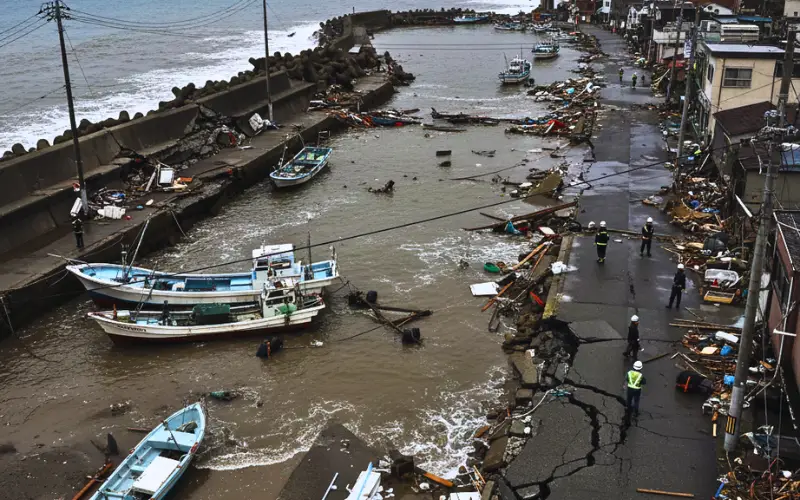
Within minutes of the earthquake, tsunami activity began along coastal areas of Hokkaido, Aomori, and Iwate prefectures.
According to JMA officials, tsunami waves measuring 40 to 50 centimeters were recorded in Kuji port (Iwate Prefecture) and along parts of Aomori’s coastline.
Authorities warned that these initial waves may not reflect the maximum tsunami height, noting that surges of up to three meters (10 feet) remain possible depending on underwater seismic shifts.
The JMA urged residents to evacuate immediately to higher ground and avoid rivers, harbors, and coastal zones until further notice. Emergency sirens were activated in several towns, and loudspeakers broadcast continuous warnings.
Injuries Reported; Infrastructure Disruptions Across the Region
Local news agencies reported several injuries, particularly in Hachinohe, where a hotel experienced structural damage. Emergency medical teams are currently assessing affected sites, though the full extent of the injuries remains unclear.
Rail operations across eastern Japan faced disruptions as East Japan Railway (JR East) suspended services in several coastal areas. Power outages were reported in isolated pockets, though grid operators confirmed that electricity was restored to most locations within hours.
Disaster response teams, fire departments, and police units have been deployed to inspect buildings, assist evacuees, and check critical infrastructure including seawalls, bridges, and tunnels.
Government Response: Emergency Task Force Activated
PM Takaichi: At least 30 people hurt and one fire reported so far full damage assessment still in progress
Prime Minister Sanae Takaichi addressed reporters shortly after the quake, confirming that the government has established an emergency task force to coordinate resources, monitor tsunami patterns, and gather damage assessments.
“We are putting people’s lives first and doing everything we can,” she stated, emphasizing preparedness and urging caution as aftershocks remain likely.
The Prime Minister’s Office is in continuous communication with regional disaster units, while Japan’s Self-Defense Forces (SDF) have been placed on standby for potential deployment.
International Alerts: Tsunami Risk Extends Beyond Japan
The Pacific Tsunami Warning Centre (PTWC) issued an advisory indicating that hazardous tsunami waves could affect coastlines within 1,000 kilometers of the epicenter, including parts of Russia’s Far East. While neighboring countries have not yet reported tsunami damage, monitoring systems remain active.
This event also triggered heightened seismic awareness among nations situated along the Pacific Ring of Fire, a zone known for its intense tectonic activity.
Japan’s Vulnerability to Major Quakes
Japan experiences nearly 20% of the world’s earthquakes of magnitude 6.0 or higher, a result of its position along multiple tectonic plates. Monday’s earthquake in Japan is one of the strongest this year and comes on the heels of several moderate quakes recorded in recent months.

Earlier this year, a 5.5-magnitude earthquake struck southwestern Japan, though no tsunami warning was issued at that time. The nation continues to invest heavily in early warning systems, earthquake-resistant architecture, and public safety drills to minimize casualties and maintain resilience.
Japan’s most catastrophic modern disaster remains the 2011 Tōhoku earthquake and tsunami, a 9.1-magnitude megathrust quake that triggered massive flooding and a nuclear crisis. Though today’s quake is significantly smaller, the memory of 2011 amplifies public caution and preparedness.
What We Know So Far
Key updates from today’s earthquake in Japan:
- Magnitude: 7.5–7.6
- Location: Off the northeastern coast near Misawa
- Tsunami waves: 40–50 cm, higher surges possible
- Warnings issued: Hokkaido, Aomori, Iwate
- Government response: Emergency task force activated
- Transport disruption: Train services temporarily suspended
- Injuries: Reported in multiple regions (assessment ongoing)
- International impact: Tsunami alerts for parts of Russia
Conclusion
Today’s powerful earthquake in Japan serves as a stark reminder of the nation’s seismic vulnerability and the critical importance of timely alerts, coastal readiness, and public awareness. With tsunami warnings still active and damage assessments ongoing, Japan’s disaster response systems remain fully mobilized.
Disclaimer: This report is based on official updates and preliminary assessments. Information may change as authorities release new data.


Contents
- 1 A powerful 7.6 earthquake in Japan triggered tsunami warnings, injuries, transport disruptions, and an emergency government response. Coastal regions remain on alert as authorities monitor rising waves and potential aftershocks.
- 2 Powerful 7.6 Quake Jolts Northeastern Japan
- 3 Tsunami Waves Already Recorded; Higher Surges Possible
- 4 Injuries Reported; Infrastructure Disruptions Across the Region
- 5 Government Response: Emergency Task Force Activated
- 6 International Alerts: Tsunami Risk Extends Beyond Japan
- 7 Japan’s Vulnerability to Major Quakes
- 8 What We Know So Far
- 9 Conclusion