
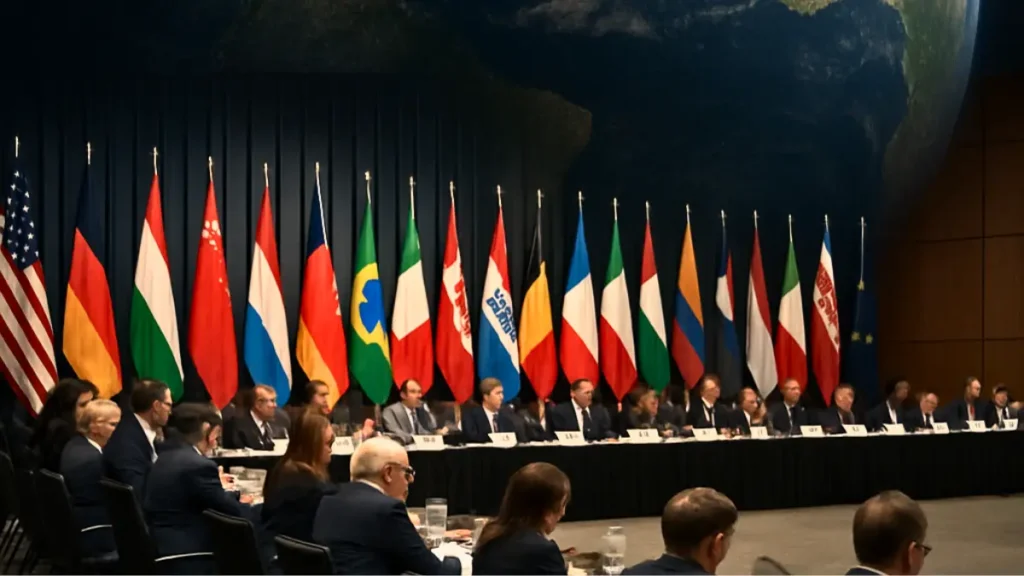
Ten years after its adoption, the Paris Climate Agreement has reshaped climate law, energy markets, and policy worldwide, but experts warn faster emissions cuts are still needed to avoid dangerous warming.
Paris Climate Agreement Marks a Decade of Global Climate Action
Paris/New York- The Paris Climate Agreement, adopted in December 2015 by nearly every nation, marked a historic moment in global climate diplomacy. As the treaty reaches its 10th anniversary, new legal developments, energy-sector data, and policy shifts offer a clearer picture of how the agreement has influenced global climate action over the past decade.
While the world remains far from meeting its climate targets, experts say the agreement has significantly altered the direction of international climate policy.
A Global Framework for Climate Action
The Paris Climate Agreement brought together 194 countries with the shared goal of limiting global temperature rise and pursuing efforts to keep warming below 1.5°C above pre-industrial levels.
Unlike earlier climate treaties, Paris relied on nationally determined contributions, allowing countries to set their own emissions-reduction plans within a common framework.
At the time of its adoption, analysts viewed the agreement as a foundation rather than a final solution one that would require sustained political and economic action to succeed.
Landmark Legal Development in 2025
A decade after adoption, the Paris Agreement remains central to global climate efforts.
A major shift came in July 2025, when the International Court of Justice (ICJ) issued a landmark advisory opinion stating that countries have a legal obligation to address climate change.
The court concluded that governments must regulate emissions-causing activities, including those of businesses, when such actions contribute to environmental harm. The ruling also recognized the right to a clean, healthy, and sustainable environment as essential to the protection of human rights.
Legal experts noted that the Paris Climate Agreement was cited repeatedly in the court’s opinion, strengthening the treaty’s influence beyond voluntary commitments.
Role of Climate-Vulnerable Nations
Small island states and climate-vulnerable nations played a critical role in shaping the Paris Agreement, particularly in securing the 1.5°C temperature target. These countries argued that higher thresholds would pose severe risks to their populations, infrastructure, and ecosystems.
Their advocacy also led to increased scientific focus on the implications of exceeding 1.5°C. A special report by the Intergovernmental Panel on Climate Change (IPCC) later outlined the rapid emissions reductions required to meet that goal, influencing climate policies worldwide.
Renewable Energy Transformation
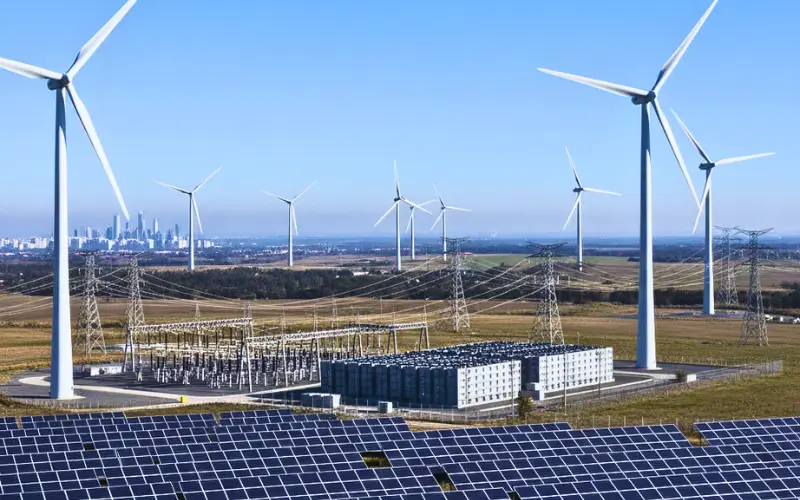
Renewable energy transformation accelerates in 2025 as solar, wind, and battery storage overtake coal in global electricity generation.
One of the most visible changes since 2015 has occurred in the global energy sector.
According to international energy agencies and research groups:
- Renewable energy overtook coal as a global electricity source in 2025
- Solar and wind power costs declined far faster than expected
- Battery storage advancements addressed concerns about intermittency
- The electricity sector became the world’s largest energy employer
Several regions now generate large portions of their electricity from clean energy, with some producing surplus renewable power during peak hours.
Policy Impact Across Major Economies
Climate commitments made under the Paris framework have influenced domestic legislation across multiple countries. In the United States, federal and state-level policies expanded clean-energy investment. In Europe, emissions-trading systems were strengthened. Several Asian economies scaled up renewable manufacturing and deployment.
China, the world’s largest carbon emitter, has recently reported slowing emissions growth, driven in part by rapid expansion of renewable energy, though long-term reductions remain uncertain.
Persistent Challenges
Despite progress, climate experts warn that current efforts remain insufficient.
Global climate adaptation has matured since the Paris Agreement, but finance and execution still lag behind.
Key unresolved issues include:
- Continued fossil fuel subsidies
- Ongoing deforestation
- Rising global energy demand
- Gaps in climate finance for developing nations
Current projections suggest the world is still heading toward approximately 2.5°C of warming, an improvement from pre-Paris estimates but well above safe limits.
The Road Ahead
As climate impacts intensify worldwide, the Paris Climate Agreement increasingly serves as a foundation for future action rather than a completed solution.
Legal accountability, energy transformation, and political commitment will shape whether the treaty’s goals can still be achieved.
F.A.Q.
-
How successful has the Paris Climate Agreement been after 10 years?
en years after its adoption, the Paris Climate Agreement has reshaped global climate policy, accelerated renewable energy growth, and strengthened legal accountability. However, current emissions trends show the world is still off track to meet its temperature targets.
-
Which countries are leading in renewable energy adoption?
Countries such as Denmark, China, Germany, and the United States have emerged as leaders in renewable energy adoption, driven by large-scale solar, wind, and battery storage investments. Several developing nations are also expanding clean energy rapidly.
-
What is climate adaptation under the Paris Agreement?
Climate adaptation under the Paris Agreement refers to efforts that help communities adjust to climate impacts such as heatwaves, floods, and rising sea levels. It includes infrastructure planning, early-warning systems, and resilience-building, especially in vulnerable regions.
Disclaimer: This article is based on publicly available reports and expert commentary. Climate policies and outcomes may evolve as new data emerges. Readers should consult official sources for the latest updates.

Contents
- 1 Ten years after its adoption, the Paris Climate Agreement has reshaped climate law, energy markets, and policy worldwide, but experts warn faster emissions cuts are still needed to avoid dangerous warming.
- 2 Paris Climate Agreement Marks a Decade of Global Climate Action
- 3 A Global Framework for Climate Action
- 4 Landmark Legal Development in 2025
- 5 Role of Climate-Vulnerable Nations
- 6 Renewable Energy Transformation
- 7 Policy Impact Across Major Economies
- 8 Persistent Challenges
- 9 The Road Ahead
- 10 F.A.Q.