
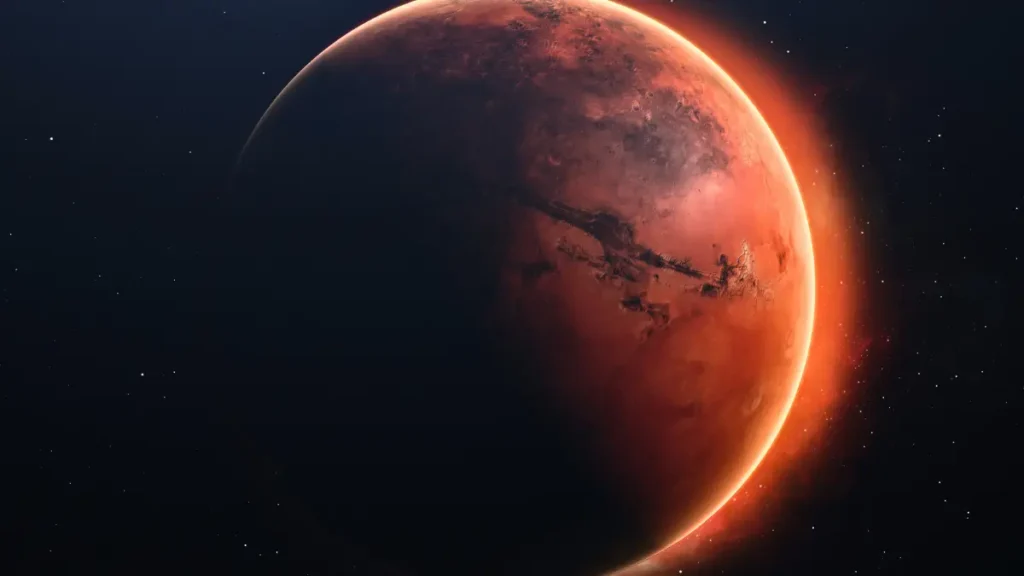
Curiosity rover’s accidental discovery of pure sulfur crystals on Mars is forcing scientists to rethink Mars life predictions, suggesting the planet once hosted complex chemical environments capable of supporting microbial energy systems.
A Discovery Hidden Inside a Cracked Rock
On May 30, 2024, Curiosity rolled over the fragile rock, causing it to split open. Inside, mission scientists spotted vivid yellow deposits later confirmed to be elemental sulfur (S₈) not sulfate minerals commonly found across Mars, but pure sulfur itself.
This was immediately unusual.
Mars is known for sulfur-rich geology, but elemental sulfur forms only under very specific and rare conditions. Until now, there was no evidence that such processes had ever taken place in the Gediz Vallis region.
This raised a fundamental question:
If Mars produced pure sulfur here, what else happened in this landscape that scientists didn’t anticipate?
Why Pure Sulfur Is So Important for Mars Life Predictions
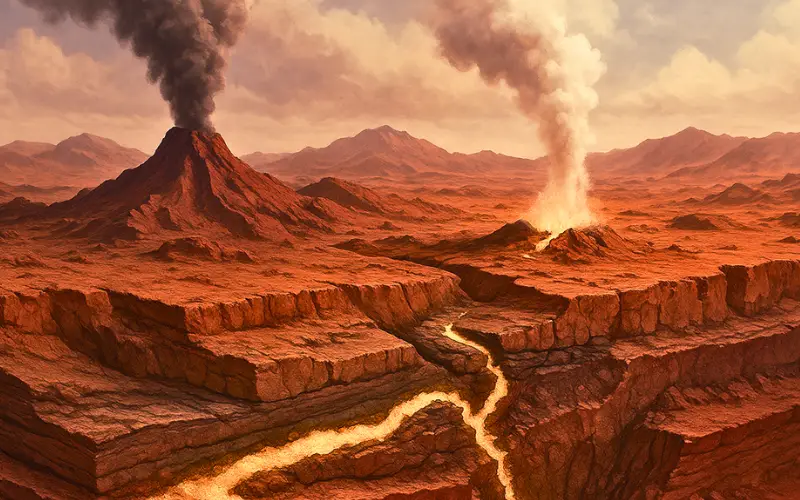
Elemental sulfur on Earth forms in environments that often support microbial ecosystems:
- volcanic vents
- hot springs
- low-oxygen hydrothermal zones
- groundwater systems undergoing chemical reactions
These environments can support life by providing energy sources for sulfur-eating microbes.
So while the discovery does not prove life existed on Mars, it does indicate that Mars may once have hosted the kinds of chemical systems that life, especially microbial could have used to survive.
This is why scientists now say the discovery may shift Mars life predictions in a new direction.
A Region Not Known for Volcanism — Until Now?
One of the biggest surprises is where the sulfur was found.
Gediz Vallis is a rugged channel carved by:
- violent floods
- debris flows
- landslides
- ancient water movement
It is not a region previously considered volcanic or hydrothermally active. Yet the sulfur suggests processes such as:
- volcanic gas reactions
- groundwater chemistry
- evaporation of mineral-rich fluids
- low-oxygen chemical cycles
may have occurred here in the distant past.
If so, this expands the number of Martian locations where habitable environments might have existed.
Groundwater Clues Hidden in the Rock Layers
New Curiosity evidence shows Mars stayed habitable far longer than expected, with ancient groundwater sustaining milder conditions.
Nearby rocks show white mineral halos, chemical scars indicating long-gone groundwater activity.
This is important because:
Water + sulfur chemistry = potential energy source for microbes.
Curiosity has previously detected sulfate minerals across Mount Sharp, but this new sulfur form adds a piece to Mars’ chemical puzzle that scientists never expected to find.
According to NASA’s geochemistry team, the combination of sulfur forms found in this region suggests that:
Mars once had shifting, dynamic chemical cycles far more complex than previously believed.
This not only supports the possibility of past habitability but also demands a re-evaluation of several Mars life predictions based on older, more limited data.
A Chance Accident with Big Scientific Impact
Because the original sulfur-bearing stones were too soft to drill, Curiosity searched for a sturdier sample nearby. On June 18, 2024, the rover successfully drilled into a rock called Mammoth Lakes, gathering powdered material for detailed internal testing.
Scientists are currently analyzing the sample for:
- phosphorus
- carbon
- nitrates
- additional sulfur types
- isotopic ratios
These ingredients will help determine whether the sulfur formed from volcanic gases, groundwater interactions, or something more unusual.
Every scenario has a different implication for understanding ancient Martian environments and each one influences Mars life predictions differently.
Does This Mean There Was Life on Mars?
Not directly, but it opens the door wider.
Elemental sulfur is often associated with microbial ecosystems on Earth. While Curiosity has not detected biological activity, the discovery suggests that Mars once had:
- chemical gradients
- reactive minerals
- potential energy sources
- episodic water flows
All of which are crucial ingredients in many life-supporting systems.
This is why researchers say the find pushes Mars life predictions into “a more optimistic yet more complex territory.”
A Discovery That Rewrites the Mars Story
NASA scientists admit this sulfur discovery was unexpected, but it may turn out to be one of the most important clues yet about Mars’ ancient environment.
It suggests:
- Mars had a richer chemical environment
- Previously unknown processes occurred in Gediz Vallis
- Mars’ habitability window may have been broader than believed
One cracked rock has reshaped how scientists visualize early Mars and how they form the next generation of Mars life predictions.
Disclaimer: This article is based on current NASA data and scientific interpretations. Findings may change as new evidence emerges. Content is for educational and informational purposes, not definitive proof of past Martian life.

Contents
- 1 A Discovery Hidden Inside a Cracked Rock
- 2 Why Pure Sulfur Is So Important for Mars Life Predictions
- 3 A Region Not Known for Volcanism — Until Now?
- 4 Groundwater Clues Hidden in the Rock Layers
- 5 A Chance Accident with Big Scientific Impact
- 6 Does This Mean There Was Life on Mars?
- 7 A Discovery That Rewrites the Mars Story