Orange rivers across the Arctic are spreading as thawing permafrost releases iron and metals into waterways, offering a vivid warning of accelerating climate change and growing risks to fragile polar ecosystems.
Orange Rivers Signal Rapid Arctic Warming
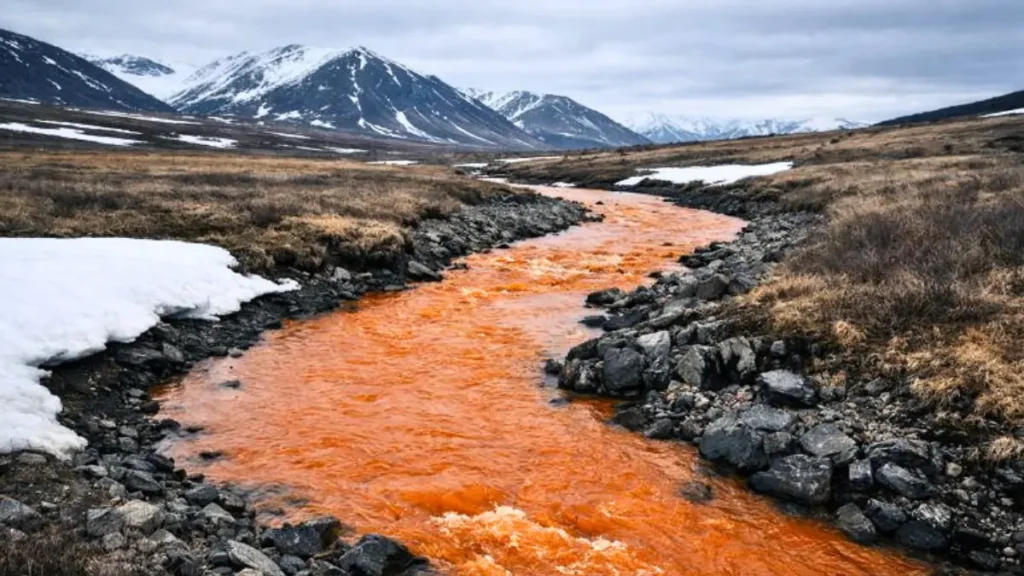
Anchorage, Alaska Rivers and streams across large parts of the Arctic are turning an alarming shade of orange, a phenomenon scientists say is one of the clearest visible signs of rapid climate change in the region.
The striking discoloration, now documented across northern Alaska and other Arctic areas, is not caused by industrial pollution but by thawing permafrost releasing naturally occurring metals into waterways.
The spread of these so-called orange rivers has been highlighted in the National Oceanic and Atmospheric Administration’s (NOAA) Arctic Report Card, an annual assessment tracking environmental change in the rapidly warming Arctic.
What Is Causing Arctic Rivers to Turn Orange?
New federal findings link orange rivers and melting glaciers to accelerating Arctic warming.
Researchers explain that the orange coloration is primarily caused by iron leaching from long-frozen soils as permafrost thaws. When frozen ground melts, oxygen and water penetrate deeper layers of soil, triggering chemical reactions that release iron and other metals into nearby streams.
Once these metals reach river systems, the iron oxidizes, turning the water a bright orange or rust-red color. Scientists say the transformation can occur quickly, sometimes within days or weeks after permafrost begins to thaw.
The phenomenon has been most widely observed in the Brooks Range of northern Alaska, where hundreds of miles of waterways have shown signs of discoloration in recent years.
Not Pollution, but a Climate Warning
Despite their appearance, orange rivers are not the result of mining runoff or chemical dumping. Instead, they reflect a natural process accelerated by rising temperatures.
The Arctic is warming two to four times faster than the global average, causing permafrost that has remained frozen for thousands of years to destabilize. As this frozen ground breaks down, it releases not only iron but also trace amounts of heavy metals such as copper and aluminum.
While these metals occur naturally in Arctic soils, their sudden release into rivers raises new concerns for ecosystems and water quality.
Potential Risks to Wildlife and Water
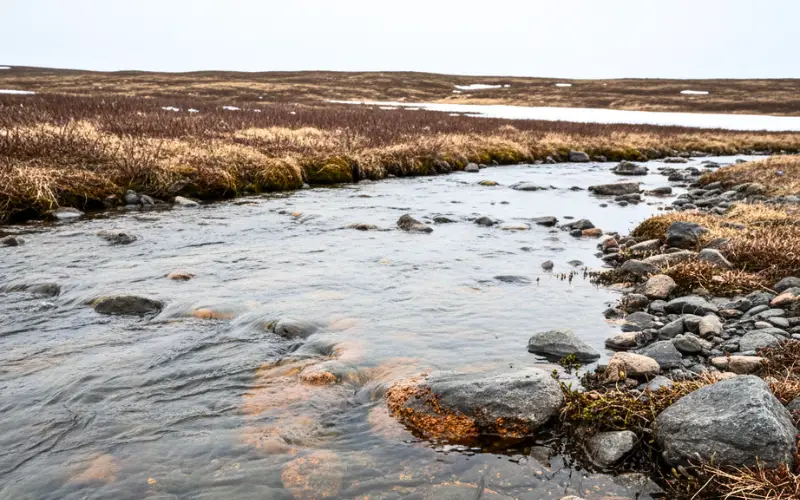
Orange rivers in Alaska as thawing permafrost releases metals into Arctic freshwater ecosystems, raising concerns about long-term impacts on wildlife and water quality.
Scientists are closely monitoring whether elevated metal levels in orange rivers could harm aquatic life. Fish and invertebrates are particularly sensitive to changes in water chemistry, and disruptions at lower levels of the food chain could ripple through entire ecosystems.
Researchers are also studying whether these metals could eventually affect rural drinking water supplies in Arctic communities. So far, no widespread contamination has been confirmed, but experts caution that continued warming could increase risks over time.
“The Arctic’s food web and water systems are tightly connected,” scientists note, meaning even subtle chemical changes can have outsized impacts.
A Symptom of Rapid Arctic Change
Orange rivers are only one indicator of sweeping environmental change across the Arctic. According to NOAA’s report:
- Arctic glaciers continue to shrink at accelerating rates
- Greenland lost over 100 billion tons of ice in a single year
- Sea ice levels have reached record lows
- Warmer, saltier waters are altering Arctic Ocean ecosystems
Scientists often describe the Arctic as the planet’s “refrigerator.” As it warms, the effects are felt far beyond the polar regions, influencing global weather patterns, sea-level rise, and fisheries.
Why Scientists Are Paying Close Attention Now
Many of the changes now visible in Arctic rivers were not predicted to happen so quickly. Researchers say the speed and scale of permafrost thaw suggest climate systems may be responding faster than models anticipated.
Because orange rivers are easily visible from aircraft and satellites, they provide a rare and striking marker of environmental transformation, one that can be tracked over time to better understand the pace of Arctic warming.
Long-term monitoring efforts are now underway to map affected watersheds and measure metal concentrations across seasons.
What Comes Next
Scientists emphasize that orange rivers are not an isolated anomaly but part of a broader pattern of Arctic destabilization driven by rising global temperatures. As permafrost continues to thaw, researchers expect more waterways to undergo similar changes.
Disclaimer: This article is for informational purposes only and reflects current scientific research. Environmental conditions may change as new data emerges, and findings may be updated by future studies.

Contents
- 1 Orange rivers across the Arctic are spreading as thawing permafrost releases iron and metals into waterways, offering a vivid warning of accelerating climate change and growing risks to fragile polar ecosystems.
- 2 Orange Rivers Signal Rapid Arctic Warming
- 3 What Is Causing Arctic Rivers to Turn Orange?
- 4 Not Pollution, but a Climate Warning
- 5 Potential Risks to Wildlife and Water
- 6 A Symptom of Rapid Arctic Change
- 7 Why Scientists Are Paying Close Attention Now
- 8 What Comes Next