

The Global Shift Toward Measurable Sustainability
When I started tracking global tourism policies a few years ago, the word “eco-tourism” was mostly a marketing phrase—pretty brochures, green logos, and the occasional tree-planting campaign. But as we step into 2025, the story looks very different. Sustainability has become measurable, trackable, and, most importantly, accountable.
According to the UNWTO, international tourism rebounded sharply in 2024, hitting nearly 1.3 billion arrivals worldwide. Yet, that growth came with a cost: overcrowded cities, fragile ecosystems pushed to their limits, and communities questioning whether mass travel was still worth it. The industry’s response?
A global pivot toward responsible growth—where countries now measure success not by visitor counts but by ecological and cultural balance.
The World Travel & Tourism Council (WTTC) reports that by 2025, more than 60 countries have updated or adopted national frameworks for sustainable tourism. From visitor levies and carbon-neutral transport to community-led programs, the shift is systemic. And it’s working—destinations are beginning to see cleaner beaches, fairer revenue sharing, and happier residents.
I’ve been watching this transformation unfold, and one thing is crystal clear: 2025 isn’t about buzzwords anymore; it’s about accountability. This is the year when eco-tourism stops being a promise—and starts being a performance metric.
How Governments Are Redefining Eco-Tourism Policies
Over the past few years, I’ve seen a real change in how countries treat sustainability. What once lived in glossy brochures is now written into policy frameworks, complete with measurable goals and public dashboards.
Costa Rica expanded its Certification for Sustainable Tourism (CST) program so that by 2025 nearly 70 percent of hotels hold official certification. The country already runs on 98 percent renewable electricity and links every tourism license to emissions-reduction reporting—proof that eco-tourism can scale nationally.
Singapore is taking a data-driven route through its Hotel Sustainability Roadmap, which targets 60 percent of hotels meeting environmental standards by 2025. Tax incentives and green-building grants push properties to retrofit lighting, HVAC, and water systems.

Across the EU and UK, climate accountability is now baked into tourism planning. Under the Fit for 55: Delivering the European Green Deal, destinations must report transport emissions, accommodation footprints, and waste output as part of national climate metrics.
Meanwhile, Japan released national guidelines for low-carbon tourism zones in Kyoto and Hokkaido—pilots that reward operators reducing transport energy and single-use plastics.Eco-tourism is no longer a campaign — it’s compliance.
” Eco-tourism is no longer a campaign — it’s compliance.”
Pay-to-Protect Models — Conservation Fees & Visitor Levies
One of the most practical sustainability tools I’ve tracked is the direct-funding model: travelers pay small fees that go straight into conservation and community projects.
- Bhutan still leads here. Its Sustainable Development Fee (about USD 100 per day) caps annual visitors near 100 000 and finances cultural preservation, clean energy, and protected-area management.
- Bali, Indonesia introduced a tourist environmental levy of roughly USD 10 in 2024; by 2025 revenue funds coral-reef restoration and waste-reduction programs under its Green Bali 2030 plan.
- In New Zealand, the International Visitor Conservation and Tourism Levy (~ NZD 35) supports trail maintenance and biosecurity. Fiordland’s trail-repair projects are one of several 2025 initiatives funded entirely through this scheme.
- Rwanda has perfected transparency: its gorilla-trekking permits direct 10 percent of each fee to local communities for schools and healthcare—proof that conservation and prosperity can coexist.
” Insight: The clearer the money trail, the greater the traveler’s willingness to pay for protection.”
Managing Crowds & Protecting Heritage
When tourism rebounds too quickly, local ecosystems and heritage sites are often the first to suffer. That’s why 2025 is seeing a wave of “smart restrictions” — systems designed not to limit travel, but to protect what makes travel worth doing in the first place.
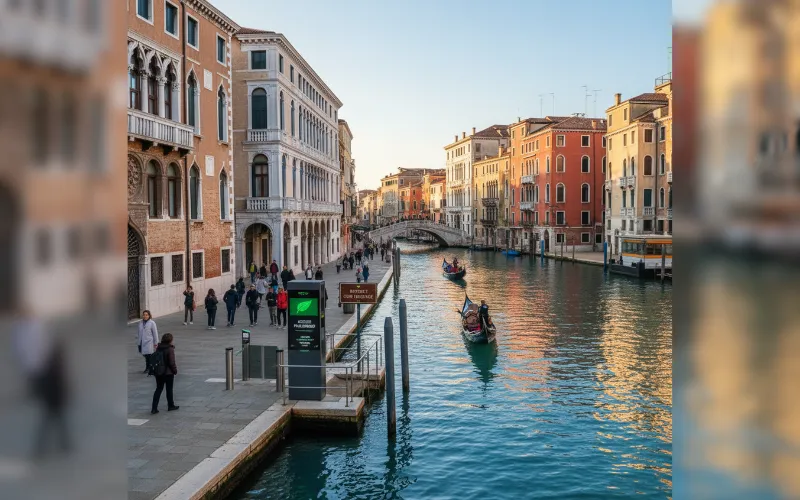
In Venice, the world’s first UNESCO-listed city facing overtourism, a daily access fee pilot is underway in 2025. Visitors who enter without an overnight stay must pre-book and pay a few euros to access the historic center. Early trials have already shown reduced congestion during peak months.
In Japan, the iconic Mt. Fuji now requires online booking and a daily climber cap. The prefectures surrounding the mountain introduced a mandatory ¥2,000 maintenance fee and a limit of 4,000 climbers per day. The result? Trail erosion has dropped, and local officials say litter volume fell by nearly 40%.
Meanwhile, U.S. National Parks are using timed-entry systems across Arches, Glacier, and Yosemite to manage surging visitation. These programs reduced vehicle congestion by over 25%, improving air quality and visitor satisfaction without cutting overall annual entries.
And in Thailand, authorities are keeping Maya Bay — made famous by The Beach — under strict seasonal closures to allow coral and marine species to recover. Since the policy began, reef health indicators have improved dramatically.
Key fact: According to UN Environment Programme data, destinations implementing visitor caps and entry controls see 15–30% biodiversity improvement within two years — a measurable win for conservation.
Clean Travel Revolution — Greener Transport in Action
Sustainability doesn’t stop when travelers land. In 2025, the real frontier of eco-tourism lies in how we move between destinations — and the shift toward low-carbon mobility has begun.
Across the European Union, the ReFuelEU Aviation law officially took effect in 2025, mandating a 2% sustainable aviation fuel (SAF) blend at all EU airports, with a target of 70% by 2050. This single regulation is expected to cut aviation emissions by millions of tons annually.
Norway continues to lead in maritime decarbonization, with over 80 electric or hybrid ferries now running in its fjords. The government’s zero-emission tourism zone plan aims to make all UNESCO fjord cruises fully electric by 2026.
In France, a short-haul flight ban now applies to routes where a rail alternative under 2.5 hours exists, pushing travelers toward high-speed trains like the TGV.
Meanwhile, Japan is piloting a “Zero-Carbon Rail Pass” in 2025 under its Green Growth Strategy. It promotes electric and hydrogen-powered rail options across Kyoto, Hokkaido, and Kyushu, blending convenience with climate responsibility.
Takeaway: “Sustainable travel starts before you reach your destination.”
Communities at the Core — Regenerative Tourism Models
The future of eco-tourism isn’t just about carbon footprints — it’s about community ownership. 2025 marks the rise of regenerative tourism: where local people lead, benefit, and protect their heritage directly.
In Kenya and Tanzania, more than 160 community conservancies now manage wildlife corridors and share 25% of total tourism revenue. According to the Kenya Wildlife Conservancies Association, elephant populations in these areas have rebounded steadily thanks to community-led protection.

In Hawai‘i, the Mālama Hawai‘i program invites visitors to volunteer in reef restoration, reforestation, and cultural programs — and rewards them with free hotel nights. Surveys show a 20% increase in resident satisfaction with tourism since the program launched.
Australia has integrated Aboriginal-led tourism experiences into its National Park Management Plans, ensuring Indigenous custodians co-manage protected lands and share their stories through guided experiences.
Insight: “Regeneration works only when locals benefit first.”
The Road Ahead — What 2025 Means for Travelers
As global tourism redefines itself post-pandemic, 2025 is emerging as the year travelers take responsibility — not just for where they go, but how they go. The shift toward sustainable, community-driven, and low-impact travel is no longer a niche trend; it’s becoming the new normal.
According to the World Travel & Tourism Council (WTTC) reports, the global sustainable-tourism market is projected to reach $400 billion by 2030, powered by travelers demanding transparency, ethical practices, and measurable environmental action.
The message is clear: the future of tourism depends on individual choices. Staying at eco-certified accommodations, choosing rail over short-haul flights, joining community-based tours, and supporting verified carbon-offset programs are no longer optional gestures — they’re essential acts of mindful travel.
Each ticket booked, each destination visited, and each purchase made is a vote for the kind of world we want to explore.
“2025 marks the year travel finally learned to give back.”
Disclaimer
This article is intended for educational and informational purposes only. All data, forecasts, and policy details are based on publicly available sources such as the WTTC, European Commission, and national tourism boards as of 2025. Readers are encouraged to verify regulations and travel advisories directly from official government and tourism websites before planning or booking travel.
Contents
- 1 The Global Shift Toward Measurable Sustainability
- 2 How Governments Are Redefining Eco-Tourism Policies
- 3 Pay-to-Protect Models — Conservation Fees & Visitor Levies
- 4 Managing Crowds & Protecting Heritage
- 5 Clean Travel Revolution — Greener Transport in Action
- 6 Communities at the Core — Regenerative Tourism Models
- 7 The Road Ahead — What 2025 Means for Travelers
- 8 Disclaimer