

In 2025, the world faces a new kind of climate emergency — one that’s measured not in degrees, but in lives lost.
According to the Lancet Countdown 2025 Report, rising heat deaths are now claiming one person every minute worldwide, making extreme heat one of the fastest-growing health threats of the century.
From the United States to India, from Europe to Africa, no country is immune. As temperatures shatter historical records, the impact of global warming on human health has shifted from theory to tragedy.
Scientists warn that if global temperatures continue to rise, heat-related deaths could double again within the next decade.
The numbers are shocking — but the science is clear: rising heat deaths are preventable if nations act with urgency.
What Are Rising Heat Deaths?
“Rising heat deaths” refer to the increasing number of fatalities caused by prolonged exposure to high temperatures, often worsened by humidity and lack of cooling.
These deaths occur when the body can no longer regulate its temperature, leading to heatstroke, organ failure, and cardiovascular collapse.
The World Health Organization (WHO) defines heat stress as one of the most direct and deadly consequences of climate change. In 2024 alone, over 525,000 people died from heat exposure — translating to roughly one death per minute.
The Science Behind Rising Heat Deaths
As greenhouse gas emissions trap more heat in Earth’s atmosphere, global average temperatures have risen by 1.3°C since pre-industrial times.
This may sound small, but for the human body, it’s catastrophic.
- High humidity + extreme temperature = reduced ability to cool through sweating.
- Urban heat islands amplify the danger, turning cities into “heat traps.”
- Nighttime heat retention prevents body recovery, increasing mortality risk.
Scientists call this “wet-bulb heat,” where humidity and temperature combine to create conditions that the human body cannot survive for long — even in the shade.
Who Is Most at Risk?
The rising heat deaths crisis doesn’t affect everyone equally.
Certain populations are far more vulnerable due to biological, social, and economic factors.
Elderly People
Older adults have reduced ability to regulate temperature, making them highly susceptible to heatstroke.
Children
Infants and young children dehydrate quickly and can experience organ stress faster than adults.
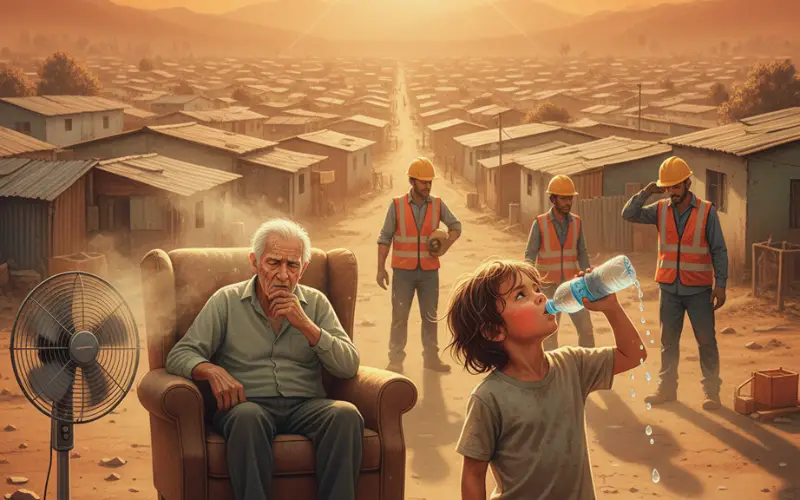
Outdoor Workers
Agricultural, construction, and transportation workers face prolonged exposure without adequate cooling breaks.
Low-Income Communities
People without access to air conditioning or green spaces face disproportionate risk, especially in urban heat zones.
These overlapping vulnerabilities make rising heat deaths a humanitarian as well as environmental crisis.
America’s Growing Heat Emergency
The United States — once considered safe from large-scale climate mortality — is now facing record-breaking heatwaves that stretch across entire states.
- In 2024, Phoenix, Arizona recorded 31 consecutive days above 110°F.
- Texas and California witnessed hundreds of excess deaths during summer months.
- Outdoor workers in Florida and Nevada reported dangerous “heat stroke clusters.”
The CDC has officially listed extreme heat as the number one weather-related killer in the U.S., surpassing floods and hurricanes.
The Biden Administration has launched initiatives like the National Heat Strategy and Blue Carbon Action Plans to mitigate the health and climate effects — but experts say the pace of adaptation is still too slow compared to the scale of rising heat deaths.
Global Impact — One Death Every Minute
The Lancet Countdown 2025 report highlights how rising heat deaths have become a global pattern:
- South Asia: India, Pakistan, and Bangladesh experienced “wet-bulb” temperatures — unbearable humidity combined with 45°C heat — killing thousands in 2024.
- Middle East: Countries like Saudi Arabia and Iran faced heat indexes over 55°C, affecting millions.
- Europe: Summer 2024 became the continent’s deadliest on record, with nearly 70,000 heat-related deaths.
- Africa & Latin America: Many deaths remain undocumented, as rural and low-income regions lack health data tracking.
How to Prevent Rising Heat Deaths
Experts insist that rising heat deaths are not inevitable — they are a policy failure.
Here’s how we can reverse the trend:
- Urban Cooling Infrastructure: Cities must expand tree cover, rooftop gardens, and reflective pavements to combat the urban heat island effect.
- Renewable Energy Transition: Reducing greenhouse gas emissions is the root solution. Accelerating the shift to solar, wind, and clean hydrogen can lower long-term heat stress globally.
- Health System Preparedness: Governments should implement heat health early-warning systems, train hospitals for heat-related illnesses, and make cooling shelters widely accessible.
- Protecting Vulnerable Groups: Provide community-based cooling centers, water access points, and social outreach programs for low-income, elderly, and outdoor populations.
- Global Collaboration: We need international climate-health partnerships to share technology, data, and adaptation finance — especially for nations with limited resources.
What the Future Holds
If global emissions continue at the current rate, the world could face over 2 million heat-related deaths annually by 2050.
But if countries honor their Paris Agreement targets and invest in adaptation and early warning, most of these deaths could be prevented.
Turning Rising Heat Deaths into a Turning Point
The growing toll of rising heat deaths is a defining warning of our time. It’s not just an environmental crisis — it’s a global health emergency.
Each life lost to heat is a reminder that climate inaction carries a human price. But this crisis also presents an opportunity: to build cooler cities, stronger health systems, and a cleaner energy future.
The world can no longer afford to count victims — it must start counting solutions.
If we act decisively, the story of rising heat deaths could become the turning point where humanity finally turned down the planet’s fever.
Disclaimer: This article is based on verified research reports, including the Lancet Countdown 2025, and is intended for educational purposes only. Data and findings may change with new research.