


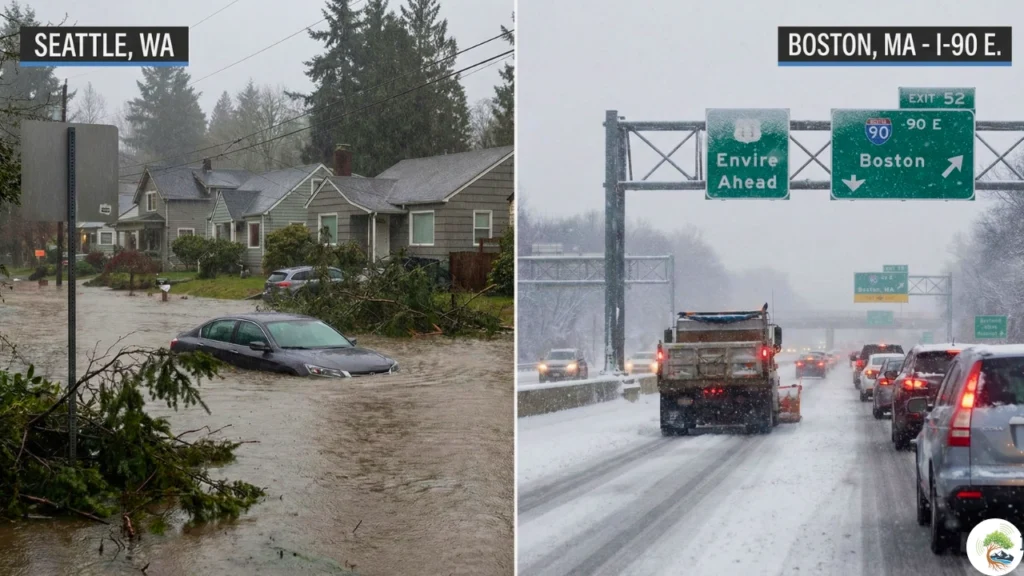
Heavy rain, flooding, snow, and strong winds are impacting multiple U.S. regions at once, creating dangerous travel conditions ahead of the holidays.
As millions of Americans prepare for holiday travel, a powerful coast-to-coast storm system is creating dangerous conditions across large parts of the country. From flooded rivers in Washington state to snow-covered roads and strong winds in the East, this active weather pattern is affecting daily life, travel plans, and public safety all at once.
Watching alerts roll in from different regions, it’s clear this is not a localized event. It’s a nationwide system with multiple hazards unfolding at the same time.
One Coast-to-Coast Storm, Multiple Weather Threats
Meteorologists say the current setup allows a single storm pattern to produce very different impacts depending on location. Heavy rain in the Pacific Northwest, strong winds across central states, and snow in the Northeast are all tied to the same system.
According to analysts at NBC News, more than 31 million people are under strong wind alerts, while millions more remain under flood watches as the storm continues to move east.
This type of setup increases the risk of travel disruptions, power outages, and rapidly changing road conditions.
Washington State Faces Serious Flooding Risks
The most severe impacts are being felt in Washington state, where repeated rounds of heavy rain have overwhelmed rivers, streams, and drainage systems.
As per data collected by The New York Times, ongoing rainfall has raised concerns about river flooding, road washouts, and landslides, especially in areas where the ground is already saturated.
NASA scientists have confirmed that strong atmospheric rivers — long bands of moisture flowing in from the Pacific Ocean — are feeding these storms, keeping rainfall intense and persistent across the region.
Streets and neighborhoods in parts of Washington have already turned into flood zones, making travel dangerous or impossible in some areas.
For deeper regional context, NatureSignals has also covered how Washington is bracing for an elevated flood risk as this pattern continues.
Power Outages Add to the Northwest’s Challenges
Flooding is not the only concern in the Northwest. Strong winds combined with soaked soil have increased the risk of falling trees and power line damage.
As per official communication on USA Today, power outages have affected tens of thousands of customers in Washington state, raising concerns about heating, traffic signals, and emergency services during wet and cold conditions.
Officials warn that additional outages remain possible if winds strengthen or flooding worsens.
Snow and Ice Complicate Conditions in the Northeast
While the West deals with flooding, the same storm system is producing snow and icy conditions in the Northeast. Roads across parts of New York, New England, and nearby states have turned slick, slowing traffic and increasing accident risks.
According to sources cited by CBS News, snowfall in the Northeast combined with gusty winds has reduced visibility and made travel especially hazardous during overnight and early morning hours.
This snowfall is part of the broader system and not an isolated winter event. NatureSignals recently reported on how the first measurable snowfall in New York City marked a wider seasonal shift now affecting much of the country.
Damaging Winds Increase Risks Across Central and Eastern States
Strong winds are another major concern tied to this storm. In parts of the Plains, Midwest, and interior Northeast, wind gusts are reaching levels strong enough to cause power outages and make driving difficult.
As confirmed by FOX Weather, some areas are experiencing gusts strong enough to knock down trees, damage infrastructure, and make high-profile vehicles like trucks and buses unsafe on highways.
In certain regions, dry conditions combined with strong winds have also raised fire-weather concerns.
Holiday Travel Disruptions Spread Nationwide
The timing of this storm is especially problematic as holiday travel ramps up. Airports, highways, and rail systems are all feeling the strain.
As reported by AccuWeather, early Christmas travel is at risk due to a mix of heavy rain, gusty winds, and snow affecting major travel corridors. Flooded roads in the Northwest and icy highways in the Northeast are forcing delays, detours, and cancellations.
From a traveler’s perspective, plans that looked fine one day can quickly become uncertain the next as conditions change.
For a broader overview, NatureSignals is tracking winter weather chaos across U.S. travel routes, showing which regions are facing the biggest disruptions.
Why This Pattern Could Continue
Meteorologists warn that this may not be the final disruptive system before the holidays. The current atmospheric setup allows storms to move quickly from the Pacific Coast toward the East, producing repeated hazards along the way.
This aligns with NatureSignals’ earlier reporting on a strengthening atmospheric river pattern and how NOAA’s updated systems point to continued risks for the West Coast.
It also connects to broader winter shifts, including cold air pushing into central and eastern states, which NatureSignals has detailed in its sudden cold snap report affecting the South and Midwest.
Safety Takeaways for Travelers and Residents
Officials urge residents and travelers to stay alert as conditions evolve :
- Avoid driving through flooded roads
- Check flight status before leaving for the airport
- Allow extra time on snow-covered or windy highways
- Keep emergency supplies in vehicles
- Follow local evacuation orders and weather alerts
Simple precautions can help reduce risks during rapidly changing weather.
Final Thoughts
This storm shows how one active weather pattern can impact the entire country in very different ways. Flooding in the West, snow in the Northeast, and damaging winds across central states are all part of the same system, and its timing during peak holiday travel makes it especially disruptive.
Staying informed and flexible may be the most important tools for anyone traveling or living in affected areas over the coming days.
Disclaimer: Weather conditions can change rapidly. This report is based on official forecasts and verified sources available at the time of publishing. Always follow local authorities and emergency alerts for real-time guidance.


Contents
- 1 One Coast-to-Coast Storm, Multiple Weather Threats
- 2 Washington State Faces Serious Flooding Risks
- 3 Power Outages Add to the Northwest’s Challenges
- 4 Snow and Ice Complicate Conditions in the Northeast
- 5 Damaging Winds Increase Risks Across Central and Eastern States
- 6 Holiday Travel Disruptions Spread Nationwide
- 7 Why This Pattern Could Continue
- 8 Safety Takeaways for Travelers and Residents
- 9 Final Thoughts