
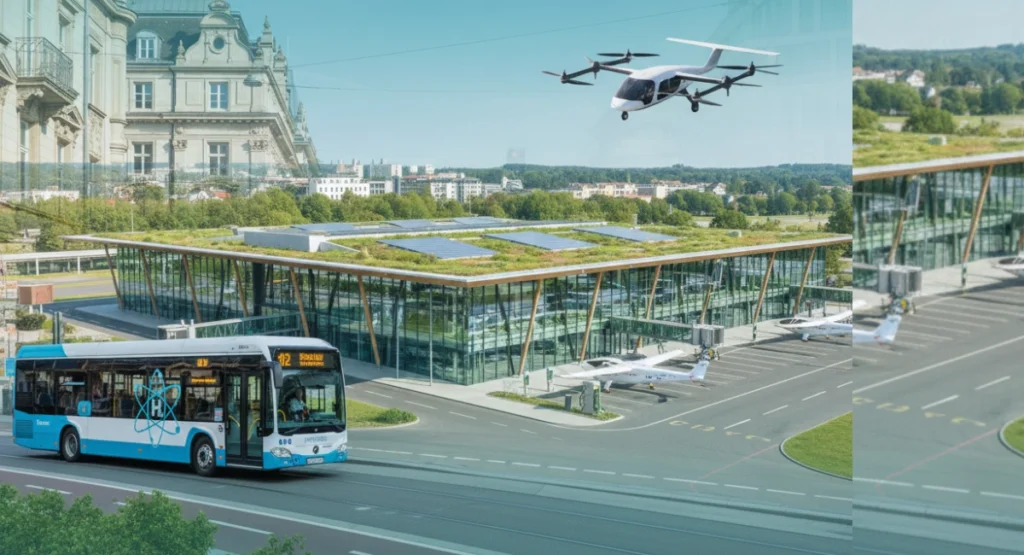
Countries worldwide are adopting hydrogen buses, green airports, and electric vertiports as tourism enters a new low-carbon future.
The Rise of Climate-Friendly Travel in 2025
Carbon-neutral travel is no longer just a future idea. It is already happening around us. Countries across Europe, Asia, and the Middle East are moving fast toward clean transport, green airports, and zero-carbon aviation.
When I started looking at the latest reports and travel news, I noticed one clear trend — tourism and climate action are now connected more strongly than ever.
Why the World Is Entering a Carbon-Neutral Travel Era
- Climate discussions at COP conferences are putting pressure on the travel industry.
- Global tourism produces nearly 8% of world emissions.
- Countries have announced targets for net-zero by 2030–2050.
- Travelers today prefer places that show real sustainability efforts.
“As I read through multiple climate reports, I realised something: travel is changing faster than most people expected.“
Hydrogen Buses: The New Transport Standard
Europe Leading the Shift
Many European cities are replacing diesel buses with hydrogen-powered buses.
Examples:
- Vienna recently introduced hydrogen buses for daily public use.
- Germany, France, and the UK are expanding their hydrogen fleets quickly.
- These buses release zero tailpipe emissions and run very quietly.
According to the European Union’s Clean Hydrogen JIVE project, more than 140 fuel cell buses have already been deployed across multiple locations.
Why Hydrogen Buses Matter for Tourism
- Cleaner air in major tourist cities
- Less noise around historic locations
- Better for long routes than electric buses
- Lower carbon footprint for local sightseeing
For tourists and locals, this is one of the easiest ways to experience climate-friendly travel.
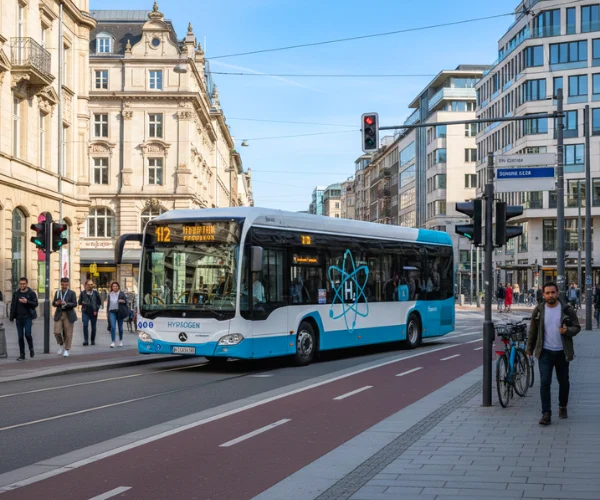
A hydrogen-powered city bus on European streets, reflecting Europe’s shift toward clean mobility.
Green Airports Are Transforming Global Aviation
Airports Going Net-Zero
Airports are becoming one of the fastest sectors to adopt green technology.
Recent examples:
- Manchester Airport introduced a Low-Carbon Tourism Framework.
- Finavia (Finland) now operates carbon-neutral airports.
- Japan, Dubai, and Singapore are making major sustainability upgrades.
What Makes an Airport “Green”?
- Solar-powered or renewable-powered terminals
- LED and energy-efficient lighting
- Electric ground support vehicles
- Reduced waste systems
- Green building designs
- Water recycling systems
- Many airports now use Sustainable Aviation Fuel (SAF) as part of their net-zero roadmap, helping aviation reduce long-term carbon emissions.
“While researching global aviation updates, I was surprised to see how many airports are already shifting to renewable systems.“
Zero-Carbon Vertiports: The Future of Travel
AutoFlight’s Zero-Carbon Water Vertiport
One of the most futuristic sustainability updates is the launch of a zero-carbon water vertiport by AutoFlight.
Key features :
- Works on clean electricity
- Supports eVTOL aircraft
- Ideal for coastal, island, and tourism regions
- Zero local emissions
Why Vertiports Are Important
- They enable electric air taxis
- Reduce dependence on fossil-fuel domestic flights
- Offer quick short-distance travel
- Perfect for tourist locations where roads are limited
Global Growth in eVTOL Travel
Countries preparing for commercial eVTOL operations, supported by global sustainability roadmaps highlighted in recent aviation reports :
- USA
- UAE
- Japan
- South Korea
- UK
- Australia
Companies like Skyports, Eve Air Mobility, and Joby Aviation are building networks for future commercial use.
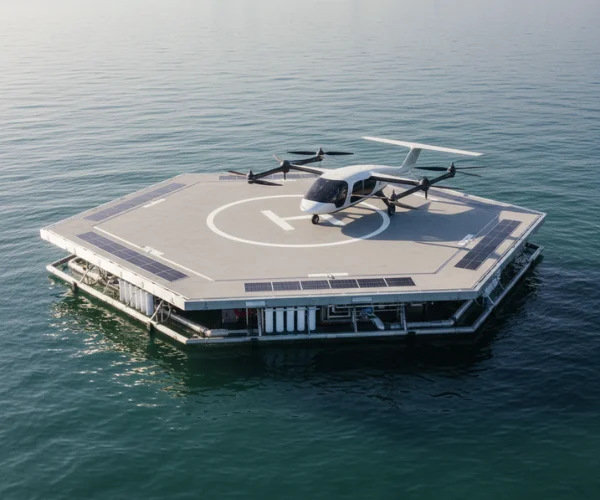
A zero-carbon water vertiport designed for next-generation electric air mobility.
Countries Setting New Sustainability Standards
Latest Global Highlights
- Austria: A 300-year-old eco-hotel is powered by trees for heating and cooling.
- Greater Manchester: New tourism report notes 2.5 million tonnes of CO₂ footprint and reveals the path to climate-friendly travel.
- Indonesia: Investing in biofuel and sustainable aviation fuel for green flights.
- Vienna: Introducing hydrogen buses as part of a citywide clean mobility plan.
- Chile, New Zealand, Iceland: Shaping a new era of protected, eco-focused tourism.
These examples show how climate solutions are becoming part of everyday travel experiences.
Why Carbon-Neutral Tourism Is Growing So Fast
- Governments are connecting climate policies with tourism development.
- Airlines are under pressure to reduce emissions.
- Global travellers prefer eco-destinations.
- Tourism boards are promoting “green itineraries”.
- Rising fuel costs are pushing companies toward cleaner technology.
- Studies show that global tourism produces nearly 8% of world emissions, driven by international flights, long-distance travel, and growing tourism demand.
“Personally, I believe this is the biggest transformation in tourism since budget airlines became mainstream.”
The Future of Global Travel
Here’s what the next few years could look like:
- Hydrogen buses will replace diesel tourist buses.
- Airports will become fully powered by renewable energy.
- eVTOL vehicles will allow silent, clean sky-taxis.
- Tourists will look for “low-carbon cities” as a new travel trend.
- Cruise lines will start adopting hybrid or hydrogen systems.
Carbon-neutral travel will soon become the new normal.
A Cleaner Travel Future Is Already Here
The world is entering a new chapter in travel — one that focuses on climate safety, clean technology, and responsible tourism. From hydrogen mobility to green airports and zero-carbon vertiports, the shift has already begun.
Countries, companies, and travelers are all becoming part of this sustainable movement.
And the next decade will decide how fast we truly move toward a planet-friendly travel future.
Disclaimer :
This article is based on publicly available news reports, environmental studies, and recent sustainability updates from global tourism and aviation sources. While every effort has been made to ensure accuracy, some information may change as new data or official announcements become available. This content is created for educational and informational purposes only and should not be considered scientific or technical advice. Readers are encouraged to verify details through official government, tourism, and aviation authorities.

Contents
- 1 Countries worldwide are adopting hydrogen buses, green airports, and electric vertiports as tourism enters a new low-carbon future.
- 2 The Rise of Climate-Friendly Travel in 2025
- 3 Why the World Is Entering a Carbon-Neutral Travel Era
- 4 Hydrogen Buses: The New Transport Standard
- 5 Europe Leading the Shift
- 6 Why Hydrogen Buses Matter for Tourism
- 7 Green Airports Are Transforming Global Aviation
- 8 Airports Going Net-Zero
- 9 What Makes an Airport “Green”?
- 10 Zero-Carbon Vertiports: The Future of Travel
- 11 AutoFlight’s Zero-Carbon Water Vertiport
- 12 Why Vertiports Are Important
- 13 Global Growth in eVTOL Travel
- 14 Countries Setting New Sustainability Standards
- 15 Latest Global Highlights
- 16 Why Carbon-Neutral Tourism Is Growing So Fast
- 17 The Future of Global Travel
- 18 A Cleaner Travel Future Is Already Here
- 19 Disclaimer :