
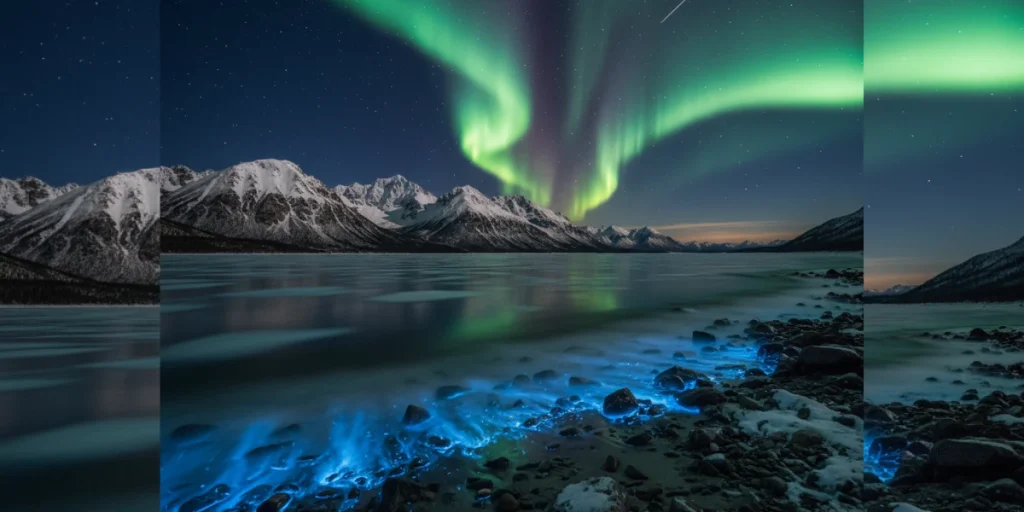
2025: The Year the Sky Comes Alive
I still remember standing under the Icelandic sky a few winters ago when the darkness suddenly split open with color. Green ribbons shimmered above me, folding and twisting like silk caught in a cosmic breeze. It was silent, unreal, and somehow humbling. That memory still gives me goosebumps — but what’s coming in 2025 promises to make even that night look ordinary.
Scientists say we’re stepping into the peak of Solar Cycle 25, a natural 11-year rhythm where the Sun’s magnetic energy surges. When that happens, Earth’s magnetic field gets hit by charged solar winds, igniting brilliant auroras far beyond the Arctic Circle. In simple terms: the Northern Lights are about to put on their brightest, most widespread show in decades.
And it’s not just the auroras. 2025 is shaping up to be a once-in-a-generation year for natural spectacles — from glowing plankton lighting up tropical beaches to pink lakes in full bloom and meteor showers painting the summer sky. As someone who’s chased these phenomena for years, I can tell you: this is the year to plan your nature-powered bucket list.
What’s Happening in 2025 – The Science Behind It
I’ve been following solar forecasts for years, and 2025 is unlike any I’ve seen. NASA and NOAA both confirm that we’re entering the solar maximum phase of Solar Cycle 25 — a period when the Sun’s magnetic energy goes wild.
Think of it like the Sun’s “storm season.” During this time, it releases intense bursts of charged particles called solar flares and coronal mass ejections (CMEs). When these particles collide with Earth’s magnetic field, they create shimmering curtains of color in the night sky — what we call the aurora borealis in the north and aurora australis in the south.
Here’s the exciting part:

Because the solar maximum is peaking in 2025, these light shows won’t just appear in traditional polar regions. Travelers across northern Europe, the U.S. (even as far south as Colorado and Oregon), and parts of Asia like Japan and Mongolia may catch glimpses of the aurora for the first time in decades.
A fun fact from NASA’s heliophysics division puts it best:
“Solar maximums are like a natural fireworks season for our planet — magnetic energy dancing through Earth’s atmosphere.”
In other words, the stage is set for the brightest auroras of our lifetime — no telescope needed, just clear skies and a bit of patience.
Where to See the Northern Lights in 2025
If I had to choose just one place to see the Northern Lights this year, I’d pick Tromsø, Norway. There’s something magical about standing on a snowy fjord, surrounded by mountains, as green and purple lights ripple across the Arctic sky.
But Tromsø isn’t the only place ready to deliver that once-in-a-lifetime experience. Here are a few more destinations I’d recommend — each offering its own flavor of the aurora adventure:
1. Tromsø, Norway – The Classic Aurora Capital
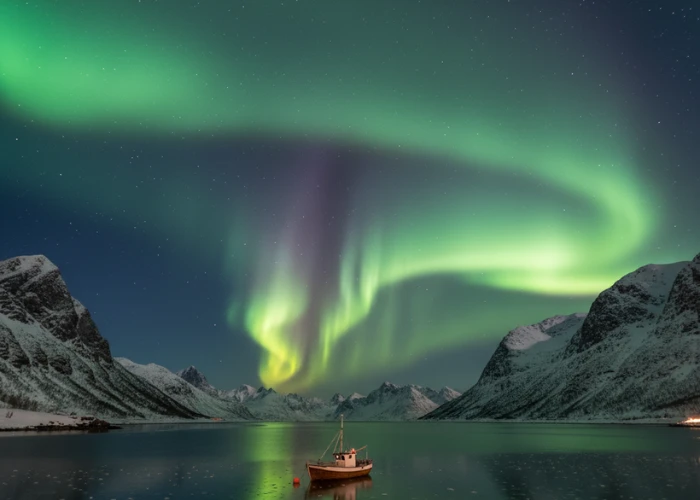
Long, dark nights and a high geomagnetic latitude make Tromsø a guaranteed spectacle. Plus, you can chase the lights by boat, bus, or even dog sled.
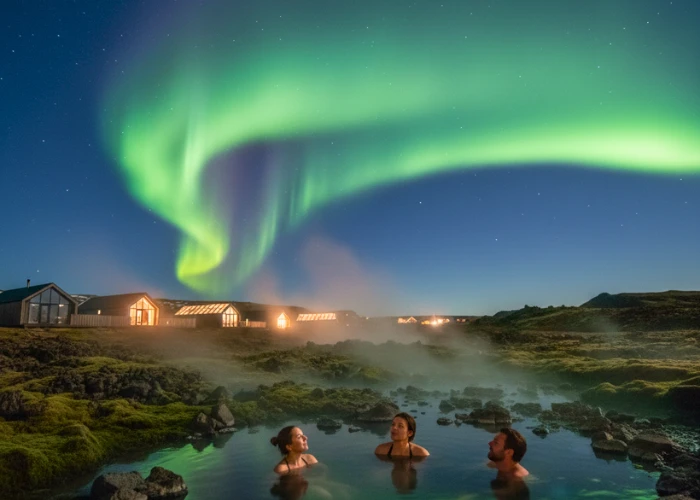
2. Reykjavík, Iceland – For Eco Travelers
Iceland is leading in sustainable aurora tourism. Stay in low-light eco lodges, soak in a hot spring, and catch the lights near Thingvellir National Park.
3. Fairbanks, Alaska – Endless Arctic Nights
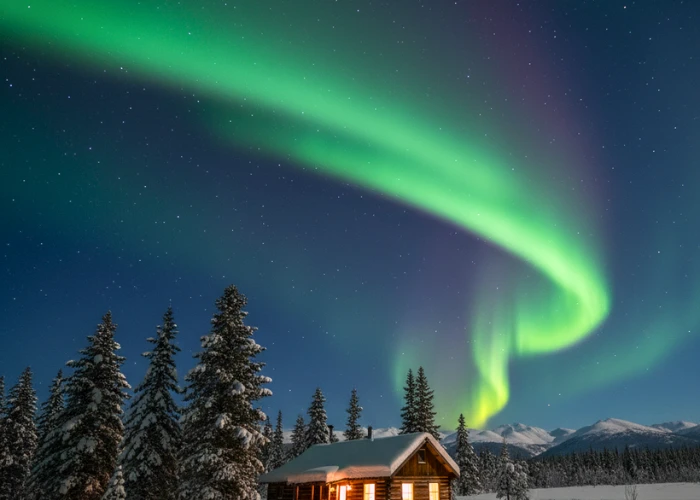
With 200+ nights of aurora activity per year, Fairbanks is perfect for travelers who want reliability over luxury. The Aurora Ice Museum is a must-visit, too.
4. Yellowknife, Canada – The Steady Aurora Belt
The skies here are dry, cold, and clear — ideal for photography. Locals say you can see the lights “four nights out of five” in winter.
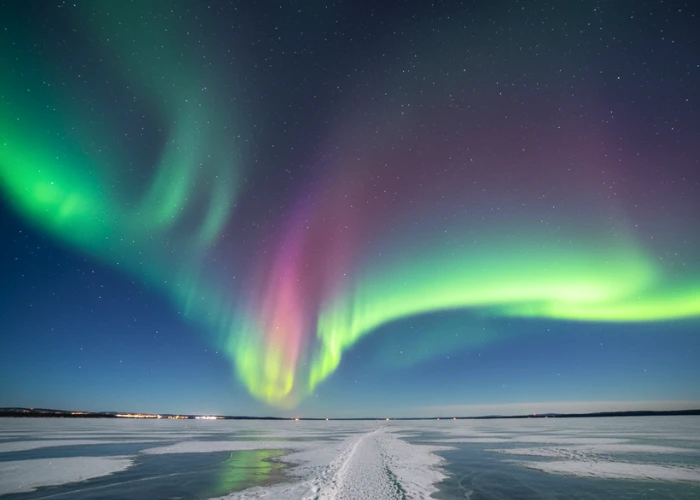
5. Lapland, Finland – The Fairytale Setting
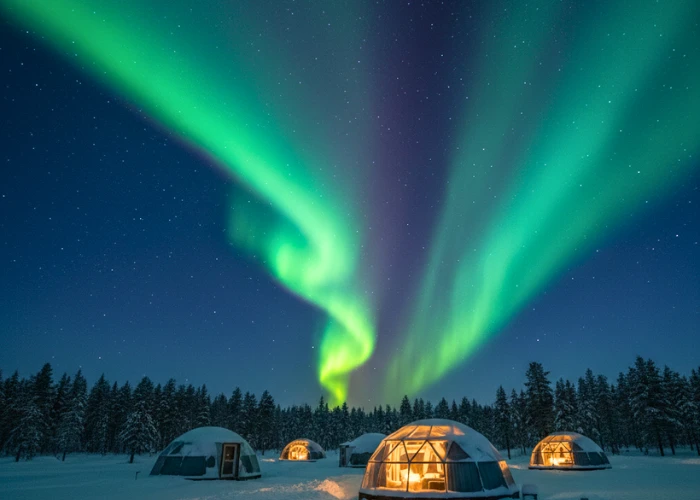
This one’s for dreamers. Imagine lying in a glass-roof igloo as the auroras swirl overhead. Finnish Lapland’s resorts make that fantasy a reality.
Best time to go:
September 2024 – March 2025, with peak activity around the equinox months (September and March) when Earth’s magnetic field tilts just right. You can explore more destinations and viewing updates in Best Served Scandinavia’s Northern Lights 2025/2026 guide.
Beyond the Auroras – Other Rare Natural Phenomena in 2025
But the magic doesn’t stop in the skies.
While the auroras are the headline act of 2025, Earth itself has a few other spectacular shows lined up—some glowing in the oceans, others painting the land in impossible colors.
Bioluminescent Beaches
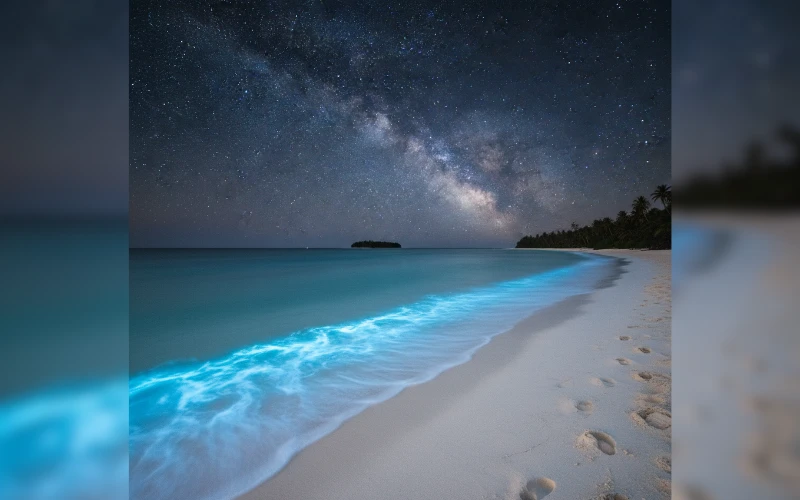
If you’ve ever seen a shoreline light up like it’s breathing, you know the hypnotic effect of bioluminescence. Tiny plankton release a neon-blue glow when disturbed by waves or footsteps. Between November and January 2025, beaches in Thailand’s Koh Rong, the Maldives, and Puerto Rico’s Mosquito Bay are forecast to shine brightest.
I always tell travelers: skip the full moon and go on a new-moon night for the full “glow-in-the-dark” experience.
Pink Lakes
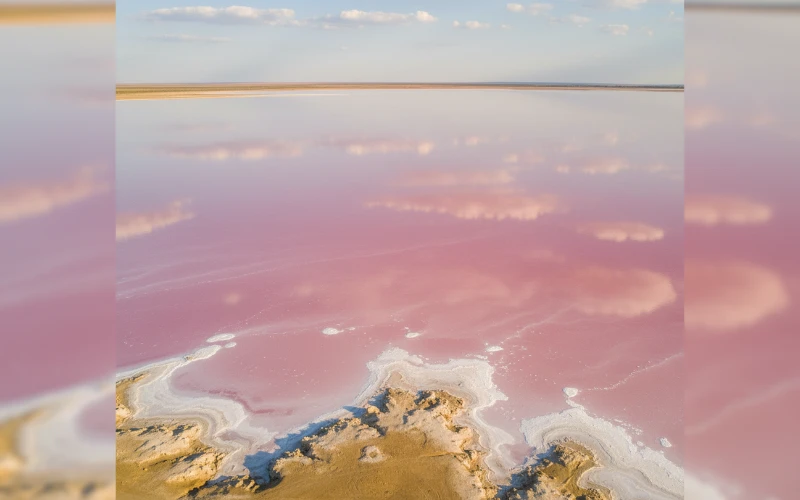
The planet’s color palette goes wild in summer when salt lakes blush pink. Thanks to high salinity and Dunaliella salina algae, lakes like Utah’s Great Salt Lake and Lake Retba in Senegal look otherworldly. Late summer is prime season, and these sites aren’t just Instagram gems—they’re living examples of how microorganisms adapt to extreme environments.
Meteor Showers
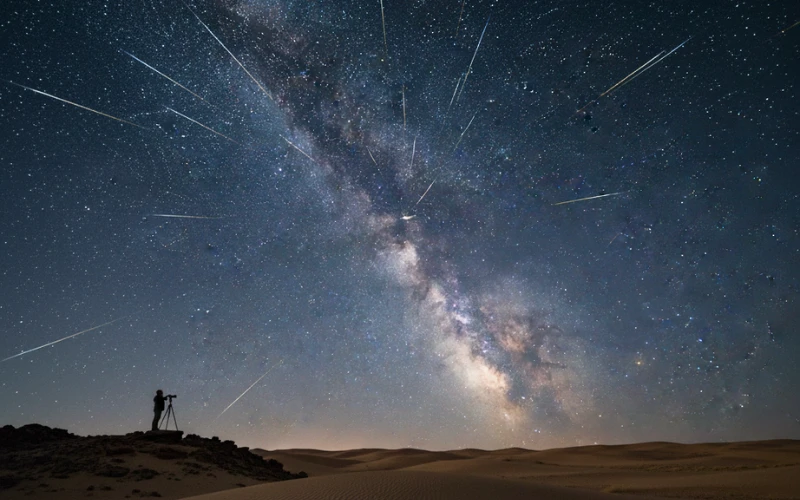
Mark your calendar: Perseids in August and Geminids in December will both peak with nearly moonless skies in 2025. The best views will be from rural deserts and northern highlands where light pollution is minimal. It’s one of the few free natural spectacles that reminds us how alive the night sky really is.
Solar Eclipse Spots
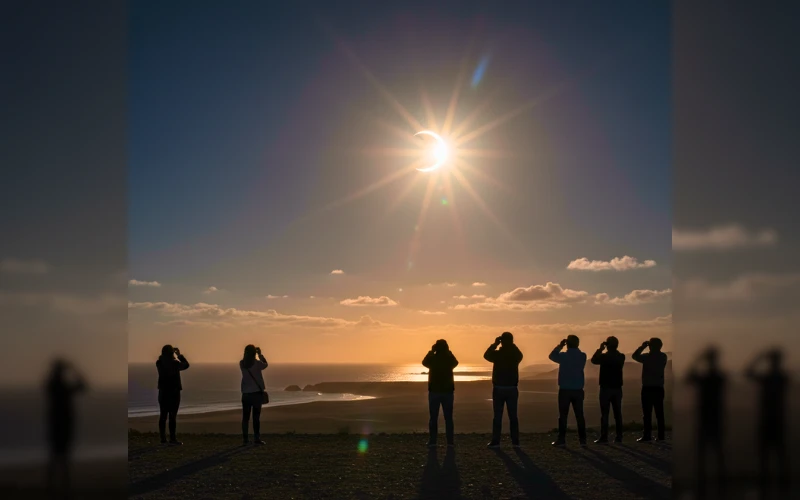
While the next total eclipse arrives in August 2026, partial and annular events in 2025 will warm up the stage—visible from South America, parts of Africa, and the Antarctic fringe. If you’ve never experienced daylight dimming to twilight, start planning now; eclipse tourism is growing faster than any other niche in travel.
Volcano & Crater Tourism
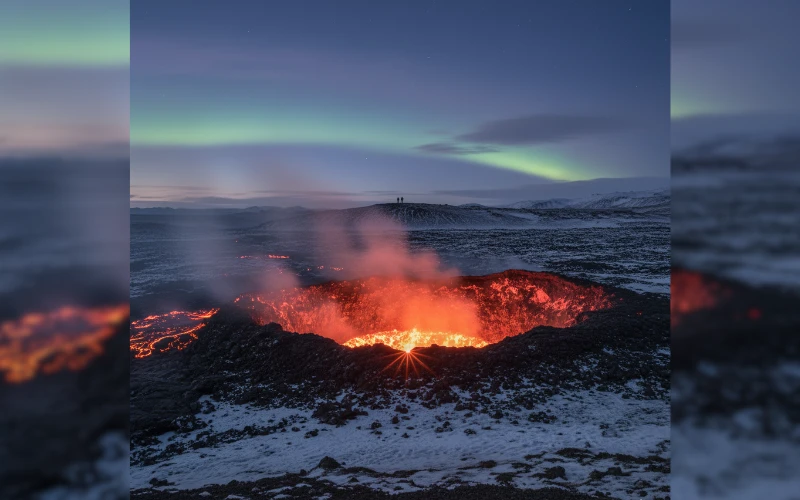
Not all natural wonders are peaceful. In Iceland, new lava fields near Grindavík continue to draw geotourists; China’s Jilin Impact Crater has opened to visitors for the first time; and Yellowstone’s geysers remain an icon of geothermal energy. As long as travelers respect safety guidelines and local restrictions, these sites deliver a glimpse of Earth’s rawest power.
Why 2025 Is a Dream Year for Nature Travelers
After years of screens and schedules, people are finally chasing awe again. 2025 marks a turning point—the year “phenomena tourism” becomes more than a trend. It’s travel powered by curiosity.
Air routes to Arctic towns have expanded, eco-lodges are prioritizing low-light pollution for aurora viewing, and small-group tours are making remote places easier to reach without overwhelming them. Post-pandemic, travelers aren’t just sightseeing—they’re seeking connection.
If you’ve ever dreamed of standing under the Northern Lights or walking a glowing beach barefoot at midnight, 2025 gives you the best odds in decades. It’s not hype; it’s science meeting wanderlust.
How to Plan Your Phenomena Trip
After chasing these events for years, I’ve learned that preparation makes the difference between watching nature’s show and being part of it. Here’s what works:
- Use NASA’s Aurora Forecast Maps.
They update in real-time and show auroral visibility by latitude. Bookmark: spaceweather.gov/aurora or NASA’s official heliophysics dashboard.
- Travel near new moons and away from city lights.
Light pollution kills the magic. I use Dark Site Finder or the Light Pollution Map app before picking any spot.
- Pack smart and stay flexible.
Weather changes fast in aurora and coastal regions. Always carry a windproof jacket, tripod, and—yes—travel insurance that covers flight delays or weather cancellations.
- Support ethical operators.
Choose eco-certified tours that respect wildlife and local communities. Many bioluminescent beaches now restrict boats to reduce water disturbance—small changes that protect big beauty.
- Track the sky like a pro.
Apps like Aurora Alerts, Stellarium, or Star Walk 2 send live notifications for geomagnetic storms or meteor showers. I keep mine on nightly when traveling.
Above all, stay curious. The more you understand what you’re seeing, the more unforgettable it becomes.
FAQs:
Q1. Why are the Northern Lights stronger in 2025?
Because Solar Cycle 25 has reached its peak. During this phase, the Sun releases more charged particles, which collide with Earth’s magnetic field — creating brighter and more widespread auroras.
Q2. What’s the best month to see them?
Between September and March 2025, when nights are longest and magnetic activity peaks. The equinox months (September and March) are statistically the most active.
Q3. Can you see auroras outside the Arctic?
Yes. Due to the intense solar storms expected this year, rare aurora sightings may extend into northern U.S. states like Montana and Minnesota, parts of Scotland, northern Germany, Japan, and even Mongolia.
Q4. What other rare natural events can travelers see in 2025?
Aside from the auroras, meteor showers (Perseids & Geminids), pink lake blooms in Senegal and Utah, glowing plankton seasons in the Maldives and Thailand, and partial solar eclipses in the southern hemisphere make 2025 one of the richest years for nature tourism in decades.
Contents
- 1 2025: The Year the Sky Comes Alive
- 2 What’s Happening in 2025 – The Science Behind It
- 3 Where to See the Northern Lights in 2025
- 4 1. Tromsø, Norway – The Classic Aurora Capital
- 5 2. Reykjavík, Iceland – For Eco Travelers
- 6 3. Fairbanks, Alaska – Endless Arctic Nights
- 7 4. Yellowknife, Canada – The Steady Aurora Belt
- 8 5. Lapland, Finland – The Fairytale Setting
- 9 Best time to go:
- 10 Beyond the Auroras – Other Rare Natural Phenomena in 2025
- 11 Why 2025 Is a Dream Year for Nature Travelers
- 12 How to Plan Your Phenomena Trip
- 13 FAQs: