
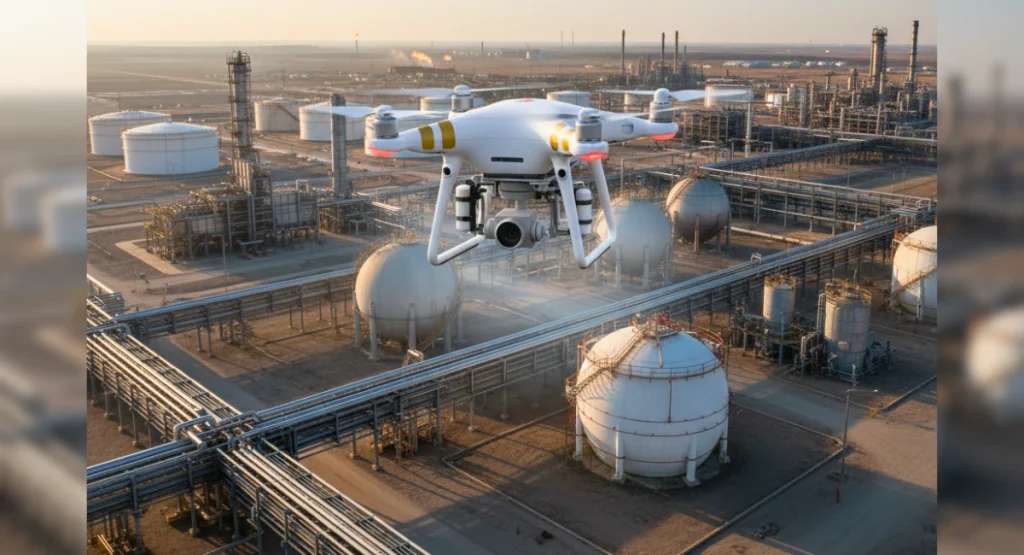
When I first read Rystad Energy’s 2025 forecast, the number honestly shocked me. Methane — the invisible yet powerful greenhouse gas — isn’t just rising; it’s accelerating faster than climate scientists expected. According to recent global projections, methane levels could surge by roughly 14% in 2025 compared to 2023, largely due to expanding oil and gas operations across Asia and the United States.

For a gas that traps more than eighty times the heat of carbon dioxide over a 20-year period, that kind of jump isn’t just data—it’s a warning.
But behind the panic lies something equally striking: a quiet, multi-billion-dollar race of innovators, engineers, and satellites all working toward one goal—to stop the methane spike before it defines our decade.
A recent global dataset visualized by researcher Leon Simons shows how serious the spike has already become — methane concentrations have now hit 1,938 ppb in 2024, tracking the highest warming scenario projected by the IPCC.
The Forecast That Changed Everything
I’ve been following climate and emissions reports for years, but Rystad’s latest methane outlook felt different—almost like a turning point. It wasn’t just another spreadsheet of emission trends; it was a mirror showing how industrial ambition and environmental neglect often move hand in hand.
The report pointed toward the usual suspects—oil and gas extraction, large-scale agriculture, and swelling urban landfills—but this time, the forecast showed just how intertwined these systems have become.
Methane, with its warming potential 84 times higher than CO₂, acts fast and furiously, amplifying temperature spikes and destabilizing weather cycles far quicker than most pollutants. From the shale basins of Texas to the coal mines of Russia and the rice fields of Southeast Asia, every region now plays a part in this unfolding equation.
What unsettled me most was the trendline—even steeper than the post-pandemic rebound in 2022—signaling that global methane control isn’t just overdue; it’s entering crisis territory.
Inside the $12 Billion Tech Revolution
While most headlines talked about the rising methane numbers, the money quietly started moving toward solutions. In the last few years, a new wave of climate technology has taken shape — smart, fast, and built to detect leaks before they become disasters.
Today, AI-powered sensors can spot invisible gas leaks in real time. Satellites like MethaneSAT, GHGSat, and Carbon Mapper are mapping entire continents from space, tracking methane plumes the way weather satellites track storms.
The latest MethaneSAT project update confirms that scientists are still releasing new emissions data through Google Earth Engine, even after communication issues with the satellite — showing how advanced methane-tracking has become in 2025.
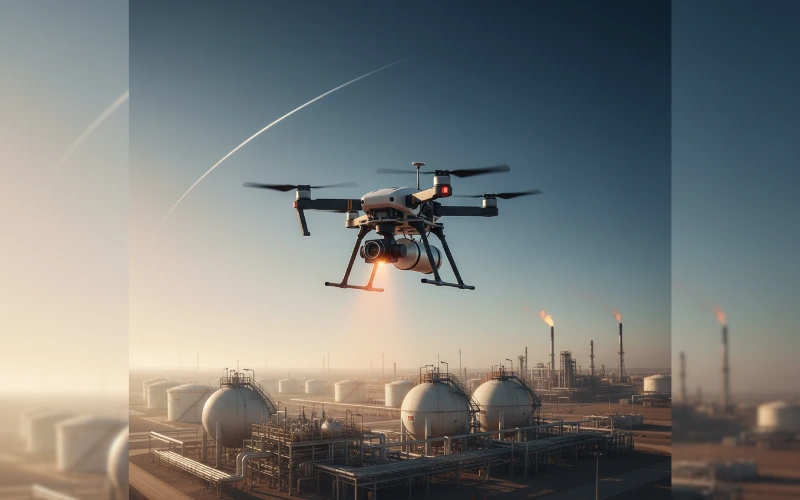
Drones from companies like Kairos and SeekOps fly over oil fields, scanning for leaks that once took teams days to find.
And then there are bio-methane startups turning waste into clean energy, and carbon-recycling labs trying to give methane a second life instead of letting it heat the sky.
Since 2022, global investment in methane-cutting technology has passed $12 billion, according to industry trackers such as PitchBook’s 2025 Climate Tech Funds Report and BloombergNEF. Big oil companies, once blamed for much of the problem, are now some of the biggest buyers of these tools.
I was surprised to see how quickly AI is replacing manual gas detection in fields that used to depend on human eyes alone. It feels like we’re finally giving technology the job it was meant to do — fixing what industry broke.
The Policy Push
Policy has finally started catching up. Governments around the world are now backing technology with real enforcement. In the United States, the EPA’s new methane rule will soon make polluters pay a fee of about $1,200 per ton of methane in 2025 if they exceed limits as outlined in the EPA’s Methane Emissions Reduction Program.
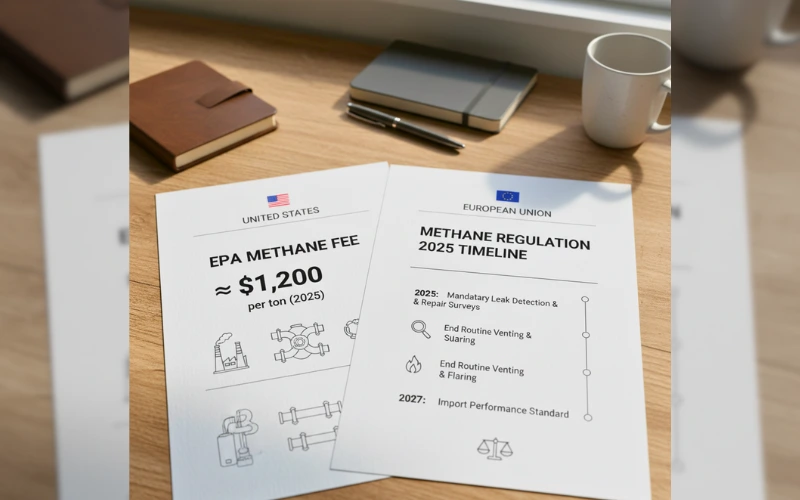
Across Europe, a new Methane Regulation coming into force the same year will require companies to inspect, repair, and report leaks on strict schedules. And globally, the Methane Pledge is getting its first big progress check, with countries reviewing how close they are to cutting 30 percent of emissions by 2030.
These steps aren’t just about fines; they’re reshaping markets. Companies investing early in leak-detection tech and cleaner operations are already seeing lower risks and better investor confidence. For the first time, climate responsibility is becoming a competitive advantage — and that’s a change worth watching.
Why Methane Matters More Than We Think
Methane doesn’t stay in the air as long as carbon dioxide, but while it’s there, it traps heat much faster — and that’s what makes it so dangerous. It affects the weather we feel every day: hotter summers, stronger storms, and unpredictable seasons that hurt both crops and communities.
When methane levels rise, farmers struggle with droughts and floods, and cities face heavier heat waves.
The good thing is, cutting methane brings quick results. Scientists say lowering methane now could help cool the planet within the next ten years — a rare “fast win” in climate action. For me, this isn’t just about graphs or reports; it’s about the air we breathe and the heat we feel each summer.
We finally have the technology, funding, and global cooperation to make real progress. The tools are in our hands — and so is the time to use them.
Final Thoughts
Looking at Rystad’s numbers now, I see two stories — one of risk, and one of reinvention. The risk is clear: if we ignore methane, the climate clock will tick faster. But the reinvention is even stronger — new tech, smarter policies, and a global will to act.
2025 might not be remembered for the methane spike itself, but for the moment we chose to stop it.
If we can track every ton of methane from orbit, maybe we can track our path to a cooler, safer planet too.
Disclaimer :
The information in this article is based on publicly available data and independent analysis from industry and research sources such as Rystad Energy, IEA, and UNEP. Figures and forecasts are subject to updates as new reports are released. This content is intended for educational and informational purposes only, not as scientific or financial advice.