
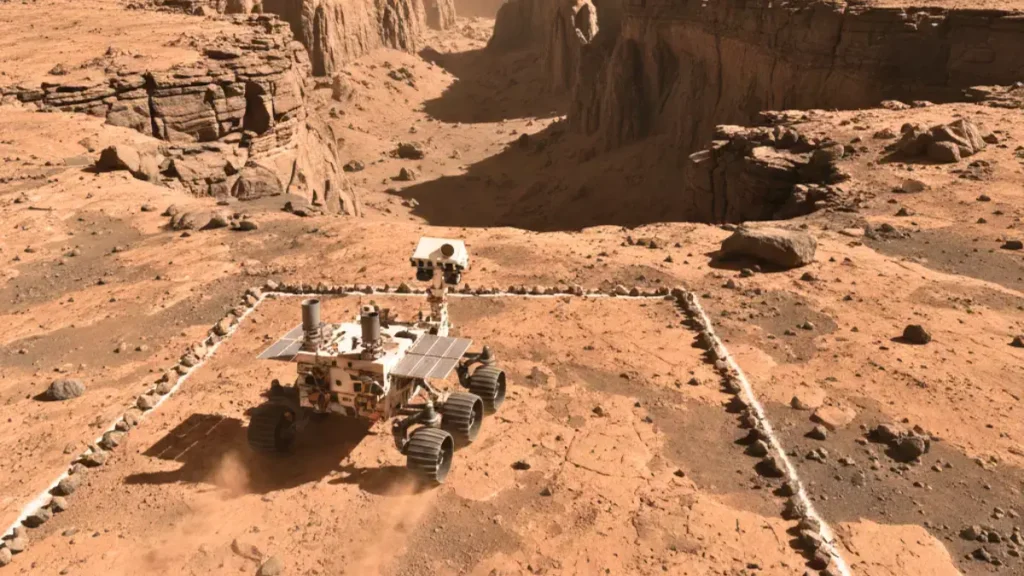
NASA’s Mars planetary protection program restricts exploration in sensitive regions to prevent contamination, preserve potential evidence of life, and ensure responsible scientific discovery as robotic and human missions advance.
How NASA’s Planetary Protection Program Shapes Mars Missions
Mars is one of the most studied planets in the solar system, with orbiters, landers, and rovers mapping its surface in unprecedented detail. Yet despite decades of exploration, large portions of the planet remain off-limits.
The reason lies in NASA’s Mars planetary protection program, a global framework designed to prevent biological contamination and preserve the integrity of scientific discovery.
While space agencies continue to search for signs of life beyond Earth, planetary protection rules place strict limits on where and how spacecraft can operate on the Red Planet.
What Is the Mars Planetary Protection Program?
The Mars planetary protection program is rooted in international space law, specifically the Outer Space Treaty of 1967. This treaty requires all spacefaring nations to explore celestial bodies responsibly and avoid harmful contamination.
In practice, the program aims to ensure that any potential life discovered on Mars is truly Martian and not the result of microbes accidentally carried from Earth aboard spacecraft.
Oversight of planetary protection standards is guided by the Committee on Space Research (COSPAR), which sets international guidelines that agencies like NASA must follow when planning missions to Mars.
Why Some Regions of Mars Are Restricted
Certain areas on Mars are classified as “special regions.” These zones are considered scientifically sensitive because they may contain environmental conditions capable of supporting microbial life, such as:
- Evidence of subsurface water or ice
- Seasonal brines or moisture
- Moderate temperatures
- Natural shielding from intense radiation
Because spacecraft, even after extensive sterilization can still carry trace amounts of Earth-based microbes, landing in these regions could permanently contaminate the Martian environment.
Such contamination would make it impossible to determine whether future biological findings originated on Mars or were introduced from Earth.
How Planetary Protection Shapes Mars Missions
Every Mars mission must undergo rigorous planning to comply with planetary protection requirements. This includes:
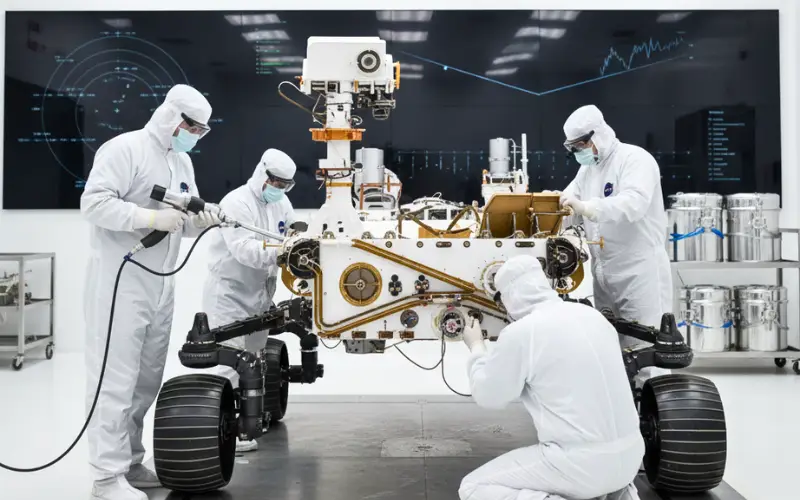
NASA technicians prepare and sterilize a Mars rover under strict cleanroom conditions, following the Mars planetary protection program designed to protect sensitive Martian environments.
- Strict spacecraft cleaning and sterilization
- Careful selection of landing sites
- Controlled mission trajectories
- Ongoing monitoring of contamination risk
These rules influence not only where spacecraft can land, but also what tools they can use and how close they can approach sensitive terrain. While this limits exploration in the short term, scientists argue it protects the long-term value of Mars research.
The Scientific and Ethical Balance
The Mars planetary protection program sits at the intersection of scientific ambition and ethical responsibility. On one hand, researchers want to explore areas most likely to hold evidence of past or present life. On the other, prematurely contaminating those regions could destroy that evidence forever.
This dilemma has sparked ongoing debate within the scientific community. Some researchers argue that Mars is already inhospitable to Earth life, while others caution that even minimal contamination could compromise future discoveries.
Challenges Posed by Future Human Missions
Planetary protection becomes significantly more complex when humans enter the equation. NASA and other space agencies are planning future crewed missions to Mars, including long-term habitation concepts.
Mars radiation risks highlight why exploration remains cautious under the Mars planetary protection program.
Humans naturally carry trillions of microorganisms, making complete sterilization impossible. As a result, scientists acknowledge that large-scale human presence on Mars could eventually lead to unavoidable contamination.
To address this, NASA is developing updated planetary protection protocols, including:
- Controlled human landing zones far from special regions
- Robotic monitoring systems to track environmental impact
- Revised contamination thresholds for future missions
Why the Mars Planetary Protection Program Matters
Without the Mars planetary protection program, early robotic missions could have unintentionally introduced Earth-based microbes onto the Martian surface decades ago, permanently compromising the search for native life.
By enforcing strict contamination controls, scientists have preserved Mars as a scientifically reliable environment, ensuring that future discoveries remain credible and uncontaminated.
As exploration technology advances and plans for human missions progress, the program continues to evolve guiding how humanity can explore Mars responsibly while safeguarding its potential biological and scientific value.
Conclusion
The Mars planetary protection program may limit where spacecraft can go today, but it safeguards the scientific integrity of Mars for generations to come. In the search for life beyond Earth, restraint may prove just as important as discovery.
F.A.Q.
-
What is the Mars planetary protection program?
The Mars planetary protection program is a set of international guidelines led by NASA and COSPAR to prevent biological contamination of Mars and protect the scientific integrity of life-detection missions
-
What are “special regions” on Mars?
Special regions are areas on Mars where environmental conditions could potentially support life. Spacecraft are prohibited from entering these zones unless they meet extremely strict sterilization standards.
Disclaimer: This article is for informational purposes only and reflects current scientific understanding. Space exploration policies and findings may evolve as research advances and new data becomes available.

Contents
- 1 NASA’s Mars planetary protection program restricts exploration in sensitive regions to prevent contamination, preserve potential evidence of life, and ensure responsible scientific discovery as robotic and human missions advance.
- 2 How NASA’s Planetary Protection Program Shapes Mars Missions
- 3 What Is the Mars Planetary Protection Program?
- 4 Why Some Regions of Mars Are Restricted
- 5 How Planetary Protection Shapes Mars Missions
- 6 The Scientific and Ethical Balance
- 7 Challenges Posed by Future Human Missions
- 8 Why the Mars Planetary Protection Program Matters
- 9 Conclusion
- 10 F.A.Q.